Urine albumin in mg/L and UACR in mg/g are different results
A urine albumin concentration and a urine albumin-to-creatinine ratio have different denominators.
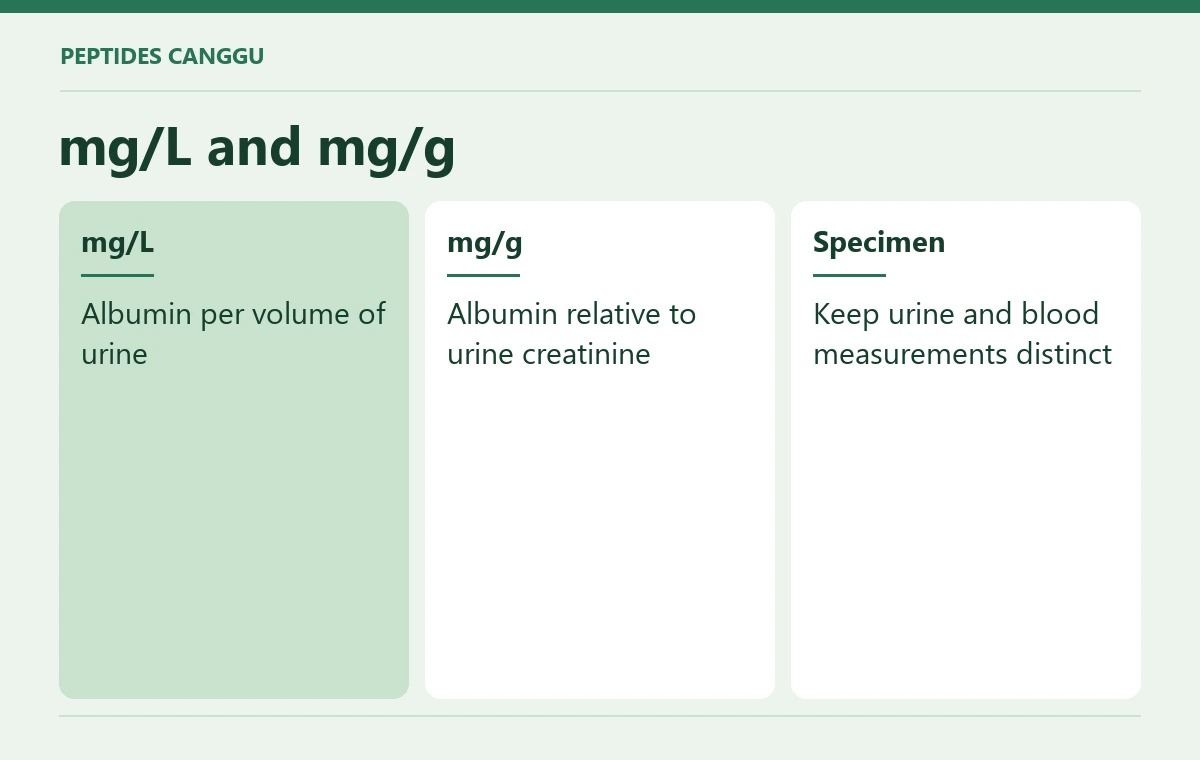
A urine albumin concentration and a urine albumin-to-creatinine ratio have different denominators. Two figures that look similar on different Bali laboratory reports may describe different measurements.
Which creatinine belongs in this calculation?
NIDDK recommends a spot urine albumin-to-creatinine ratio for assessing albuminuria. Dividing albumin by urine creatinine helps account for how concentrated the sample is. A first morning sample is preferred when available, though a random specimen can be acceptable. NIDDK guide to assessing urine albumin
The denominator of UACR is creatinine in urine from the relevant specimen. Blood creatinine appears in kidney evaluation too, so the word can be easy to misread on a combined blood-and-urine report. Check the specimen field before trying to decide what was measured. A ratio printed with millimoles in the denominator may use a different reporting system from a ratio printed per gram. Preserve the original unit even if a clinician later converts it for comparison.
A single sample has an observation window
Imagine receiving one report labelled milligrams per litre and another labelled milligrams per gram creatinine. Simply moving the decimal cannot convert one to the other: the relevant urine creatinine concentration is missing. A blood creatinine value is a different specimen and cannot fill that blank.
A spot urine sample describes the material collected at one point. Use the date of collection and any specimen comment rather than grouping all tests returned in the same email together. A result from a morning specimen and a blood result from the previous week may appear side by side on an invoice while belonging to different investigations. Keeping individual dates helps the team decide whether the results should be considered together.
Which comparison belongs in your notes?
A ratio includes information from two quantities in the same specimen. Suppose two people release comparable amounts of albumin into differently concentrated urine. The measured concentration per litre could differ even if their results tell a more similar story once the relevant urine creatinine is considered. This is the reason the report's denominator is essential. A urine sample in a very small container is not evidence of low urine output across the day either; the laboratory has received a specimen, not a full timed collection. To compare with a twenty-four-hour result, ask which measurement was requested and why. Combining values across different collection types simply to fill gaps in a spreadsheet removes the distinction the investigation was designed to preserve.
Retain units and specimen dates when taking a screenshot to a clinic. Ask whether the prior and current reports both contain a UACR before describing a rise or fall.