Retatrutide vs VK2735 in Canggu: baseline change or placebo-adjusted difference?
Compare retatrutide and VK2735 headlines in Canggu by separating weight change from baseline and placebo-adjusted change. Keep every number with its definition.
“Weight lost” and “extra weight lost compared with placebo” are different measurements. If you are comparing retatrutide and VK2735 while staying in Canggu, check which calculation a headline uses before deciding that two percentages belong side by side.
Ask what was subtracted
A change from baseline compares a group with its own starting point. A placebo-adjusted difference compares the change in the active group with the change in the placebo group. The VK2735 VENTURE poster reports both types of result. The distinction also matters when reading the retatrutide trial.
Consider a purely illustrative example: one group changes by −10% and its placebo group by −2%. Their difference is −8 percentage points. The example explains the calculation; these are invented teaching numbers, not results for either molecule.
Label a saved result properly
Write “change from starting weight” or “difference from placebo” next to the number. Also keep the study week and treatment group. A screenshot that crops out these labels removes information you need to interpret the headline.
This simple habit prevents a common mismatch: placing a baseline percentage for one molecule beside a placebo-adjusted figure for another. Even after correcting that mismatch, separate trials still differ in their participants and methods. A tidy table does not turn them into a head-to-head experiment.
Work through a small numerical example
Imagine a group beginning at a mean weight of 100 kg. For illustration, suppose the reported change is −10% in a treatment group and −3% in a placebo group over the same study period. The difference in those percentage changes is −7 percentage points. Ten, three and seven can all appear in an honest description of this hypothetical experiment, but they do different jobs. These are teaching numbers, not results for either compound.
A graph labelled “placebo-adjusted” is intended to account for the comparison group's change. The actual analysis may use a model, so a published estimate need not exactly equal the subtraction of two rounded bars. Use the authors' specified estimate, time point and definition when quoting findings. Save the chart legend rather than only the tallest column.
Identify the trial clock as well as the comparator
The retatrutide phase 2 study reported weight outcomes through 48 weeks in adults with obesity or overweight under defined entry criteria. VENTURE investigated weekly subcutaneous VK2735 for 13 weeks. Later availability of a peer-reviewed VENTURE report gives readers an alternative to reproducing an early study slide. These were separate randomized trials. Subtracting one study's percentage from the other's does not reproduce randomization between the molecules.
| If a caption gives you | Keep this next to the number |
|---|---|
| Change from baseline | Starting measure, group and follow-up week |
| Difference versus placebo | Active group, comparator, week and estimation method |
| Percentage reaching a threshold | The threshold and the people in the denominator |
| Confidence interval | The estimate that interval belongs to |
Turn a screenshot into a question
If a friend in Canggu forwards a single bar marked “weight loss,” ask for the page with the study name and legend. Check whether the bar is an average change, an adjusted difference or the proportion reaching a target. A figure such as “15%” has a completely different meaning if it describes how many people reached a target rather than how much weight the average participant lost.
A clinician deciding whether trial evidence applies to a person needs their history and the exact intervention. A local catalogue can help identify a marketed presentation; it cannot supply the missing control group or convert a 13-week result into a 48-week forecast.
Apply the distinction to a local enquiry
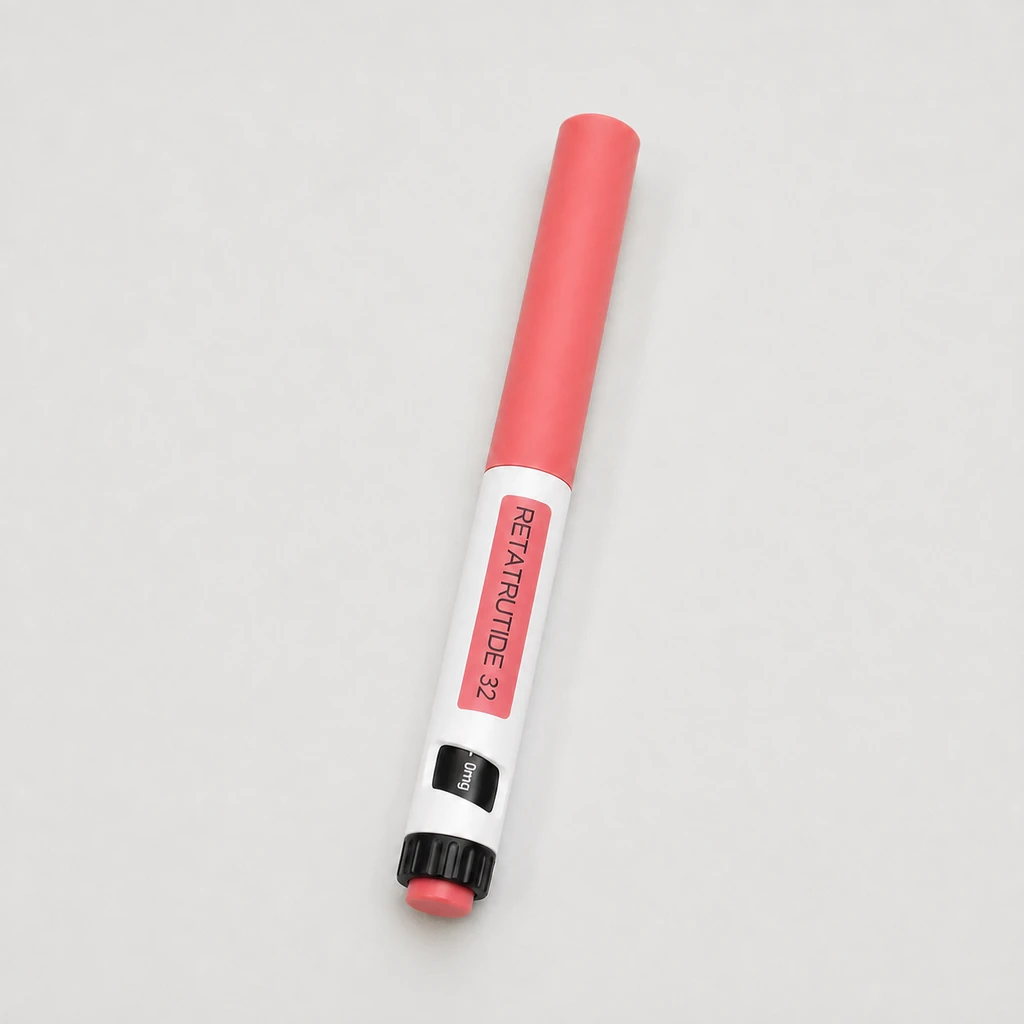
A trial percentage should not become a promised result in a Canggu order conversation. It describes a group under a research protocol. The retatrutide listing answers a different question: which compound and presentation the catalogue offers.
Use the journal to trace the source behind a claim. If a comparison cannot tell you what was measured, when it was measured and what it was compared with, ask for the original report. Those labels make the information useful without asking a retail photograph to stand in for clinical evidence.
Why keep the sign in front of the percentage?
Some authors report a reduction as a positive magnitude. Others display a negative change from baseline. Write the direction in words before combining any figures. A change of minus ten percent in weight and a ten percent reduction may describe the same direction. A positive treatment difference can mean something entirely different depending on which group was subtracted.