MOTS-C and urolithin A in Canggu: who took part in the endurance studies?
Read MOTS-C and urolithin A claims in Canggu with the study population attached. Age, intervention and outcome matter when applying a research headline.

The people in a study are part of its result. A Canggu visitor reading about MOTS-C and urolithin A should keep the population visible rather than treating “human research” as one uniform category.
Age is more than a footnote
The older-adult urolithin A trial enrolled people aged 65–90. A separate trial concerned middle-aged adults. Those labels identify different research populations, not a recommendation that every person in either age bracket should use the compound.
Differences in starting function, eligibility and the task being tested can affect how relevant a result is to a particular question. A finding about repeated muscle contractions is not automatically an explanation for fatigue during travel. Nor does an age label identify the cause of someone's symptoms.
Write a short study profile
Keep the population, intervention, comparator and outcome together. If a headline leaves one blank, find the original report before filling the gap with an assumption. Note the follow-up period too; an observation after months is not a forecast for a brief stay.
The MOTS-C discovery paper includes cellular and mouse experiments. Its experimental setting should remain visible in a comparison with a human oral-supplement trial. Otherwise, the table appears to compare like with like when it is actually combining different kinds of evidence.
Two trials can use the same word differently
In everyday conversation, endurance may mean finishing a long scooter-free walk or still having energy after a training session. A research paper must define it more tightly. The older-adult urolithin A trial included adults aged 65 to 90 years. The investigators specified a six-minute walk and muscle ATP production as primary outcomes. Other tests asked how many contractions particular muscles could perform before fatiguing.
The groups did not show a statistically significant difference for the primary walking-distance or ATP-production outcomes, although some muscle-endurance measures favoured urolithin A. A headline can therefore sound promising and still leave the original walking question unresolved. Look for both findings before deciding what the older-adult trial contributes to your own question.
The middle-aged adult trial was a different experiment in a different population. Its results belong with its own inclusion criteria, protocol and outcomes. Pooling headlines from both studies is no substitute for an analysis that actually combines comparable data.
Build a participant profile in four lines
| Field | Write down |
|---|---|
| Entry criteria | The age range and health or activity criteria in the paper |
| Intervention | Named compound, route and comparison group |
| Main question | What participants actually had to do or what equipment measured |
| Remaining uncertainty | One difference between the study group and the person asking the question |
For example, imagine a 35-year-old in Canggu preparing for a cycling event. Their question concerns repeated training and event performance. Evidence about an older group performing a six-minute walk can still be interesting, but the difference in age, starting capacity, task and time horizon matters. It is more accurate to describe the connection as indirect than to write a new performance claim.
Keep MOTS-C evidence in its own column
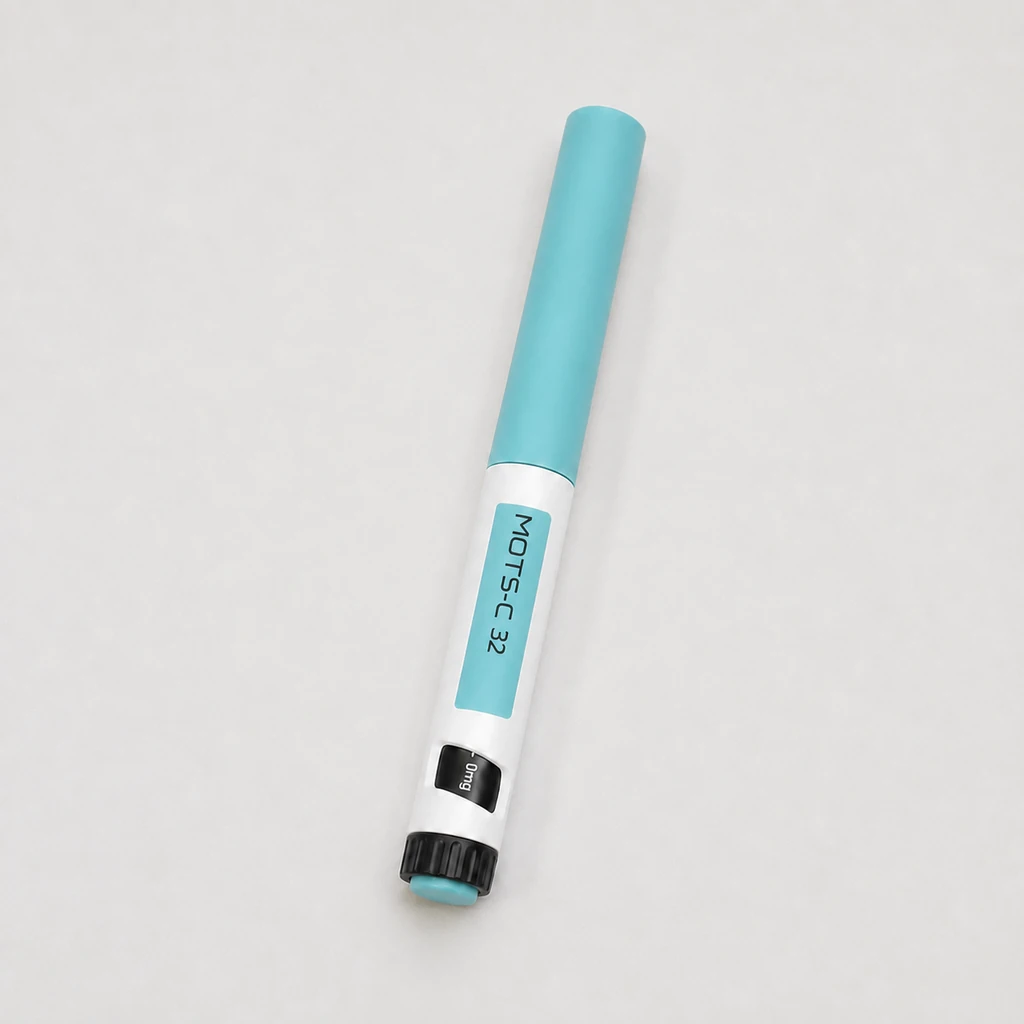
The original MOTS-C investigation reported metabolic findings in experimental systems. A trial in which people swallowed urolithin A has a different intervention. Simply placing the MOTS-C pen beside a human urolithin result does not create a human trial of MOTS-C.
For a local enquiry, retain the label and exact product name your clinician asked to see. For an exercise question, bring your usual activity, the outcome you care about and any relevant medical history. Those two records together are more useful than a reference to an unspecified “mitochondrial study.”
Use the profile in a practical discussion
If your interest comes from a change in daily function, describe that change directly. Bring the source and your question to an appropriate clinician. Asking whether a population resembles your circumstances is more useful than assuming a result applies because the headline uses the word “mitochondria”.
The MOTS-C listing describes the offered product; the journal supplies background reading. A research profile helps you understand the claim without turning it into an individualized product recommendation.
Does matching somebody's age settle the comparison?
Age is one entry criterion. Baseline health, starting performance, the intervention and the task being measured matter as well. Two people of the same age can have very different reasons for having difficulty exercising. Ask which study participants actually resembled the person asking the clinical question, and which important differences remain.