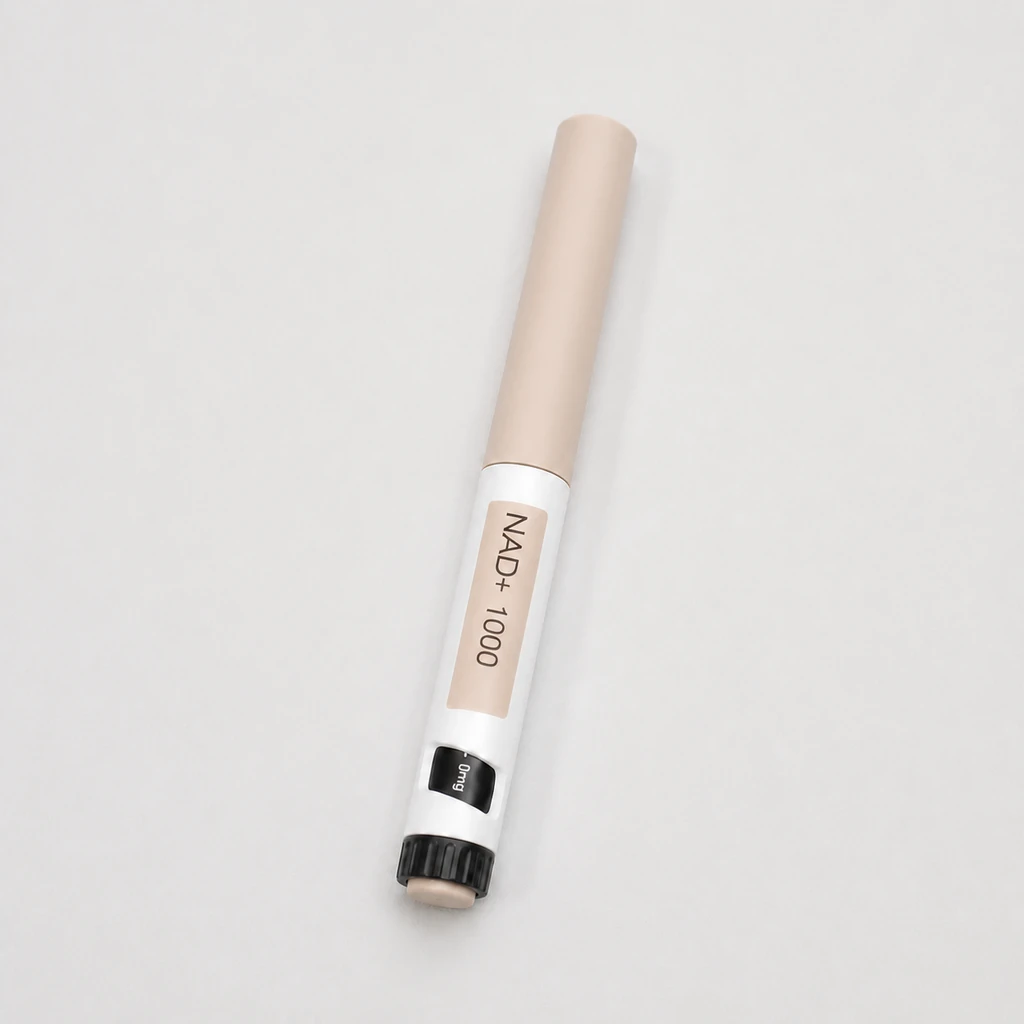
NAD+ and NADPH in Canggu: how to read the two redox pairs
Read NAD+ and NADPH claims in Canggu with the correct chemical pair visible. Learn what oxidized and reduced mean without turning chemistry into a product promise.

NAD+ and NADPH belong to related but different redox pairs. A Canggu reader comparing wellness descriptions should keep those pairs intact, because changing a letter can change what a claim actually refers to.
What is a redox pair?
Oxidation and reduction describe electron-transfer chemistry. ChEBI identifies NADP+ and NADPH as the oxidized and reduced forms of the NADP system. NAD+ and NADH are the corresponding names in the NAD system.
The H and P therefore answer different identity questions. H distinguishes a redox form; P marks the phosphorylated family. Reading both is more useful than shortening all the names to “NAD boosters”.
A chemical role is not a clinical result
NAD-kinase research investigates a connection between these cofactor systems at the cellular level. It does not establish that a particular NAD+ product delivers the same result as measuring NADPH in a laboratory experiment.
If a product description says “antioxidant support”, ask what was actually observed. Was a chemical form identified, a reaction studied, or a person assessed? The terms can be connected in biology without supplying a measured clinical benefit for every product bearing a related name.
Keep a clear reading record
Write the exact abbreviation beside the source. Underneath, note what the source did: chemical identification, enzyme experiment or human intervention. This takes little space and prevents a claim from changing meaning as it is copied between a paper, a graphic and a shop listing.
Pair the names before drawing the arrows
Write NAD+ on one line and NADP+ on another. Next to the first put NADH; next to the second put NADPH. Moving across either line describes the oxidised and reduced members of one family. Moving from the first family to the second involves a phosphate group. A diagram that draws all four abbreviations in a single straight line can hide that distinction.
The ChEBI NADP record identifies the phosphorylated compound. A primary study of NAD kinase describes regulation of the enzyme involved in producing NADP+. Read the enzyme name carefully. It helps explain how the two families are connected without turning every change in the diagram into the same reaction.
A notebook example for interpreting a headline
| A paper measures | What its result directly describes |
|---|---|
| NAD+ concentration | The measured amount of the named compound in the sampled setting |
| NAD+/NADH ratio | A relationship between two measured members of that redox pair |
| NADPH concentration | A member of the phosphorylated family |
| A self-reported symptom score | A person's recorded experience under the study's conditions |
A ratio can change even if the numerator stays steady and the denominator falls. For instance, in arbitrary classroom units, 8 divided by 4 is 2, while 8 divided by 2 is 4. The ratio doubled although the numerator did not change. This arithmetic explains why “the ratio rose” and “there was twice as much NAD+” are different statements. The classroom values say nothing about a healthy target in a person.
Check the sampled material and the product separately
A result in isolated cells describes the sampled cells under experimental conditions. A blood result describes the material collected and analysed. To connect such a finding to an experience such as fatigue after activity, a study would also need a relevant population and a defined measure of that experience. Carrying the same abbreviation across those settings does not supply the missing evidence.
For a product enquiry in Canggu, copy the complete ingredient name from the listing or pack, including the plus sign where it is printed. A claim that mentions NADPH is not a declaration that the device contains NADPH. When the wording on a page and the packaging appear different, resolve the identity before trying to compare mechanisms or prices.
The NAD+ listing provides catalogue context for a Canggu enquiry. The journal explains the surrounding concepts. If your interest comes from persistent fatigue or another symptom, describe that concern to a clinician rather than treating one abbreviation as a diagnosis. A correct redox label clarifies the science; it does not prescribe a product.
Does the plus sign identify an extra phosphate?
The added letter P identifies the phosphorylated family. A plus sign appears in the conventional oxidised names of both NAD+ and NADP+. When you copy a term from an article, retain every letter and symbol and check whether the author measured a concentration, a ratio or an enzyme activity.