A high lipase result: which symptoms and timing matter?
Lipase is a digestive enzyme commonly measured when clinicians evaluate possible pancreatic problems.
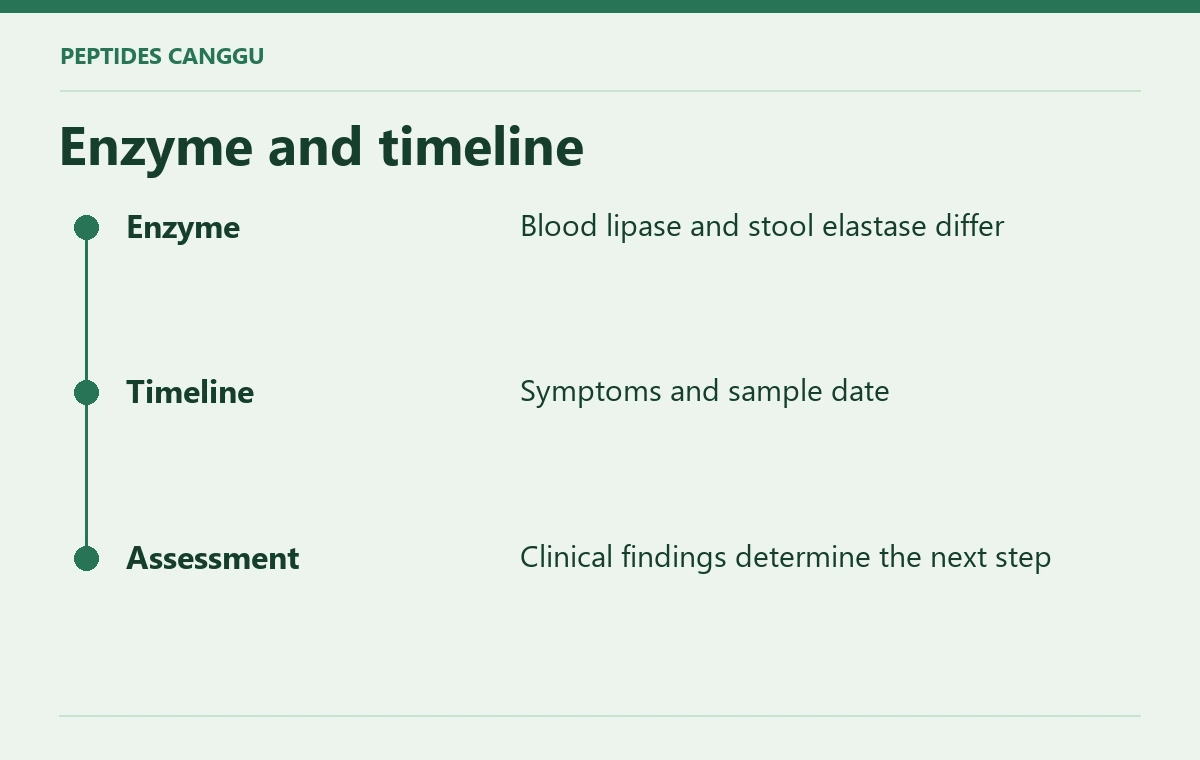
Lipase is a digestive enzyme commonly measured when clinicians evaluate possible pancreatic problems. A raised test is a clue to interpret with symptoms, examination and other findings. It does not by itself identify the cause.
The clinical question behind the blood draw
MedlinePlus notes that lipase can be raised in conditions including acute pancreatitis and in other circumstances. The test answers a different question from stool elastase, which is used in assessing longer-term digestive enzyme production. MedlinePlus on lipase testing
A clinician investigating sudden abdominal pain has a different question from someone monitoring long-standing digestive problems. Lipase can contribute evidence about the first situation, but the assessment may also depend on the character of pain, the examination and other tests. An abnormal laboratory flag says only that the measured value falls outside that laboratory's specified interval. It does not establish a cause, the time the illness began, or which of several medicines is responsible. The order in which symptoms, medicine changes and sampling occurred is valuable information.
Make the symptom record concrete
An abnormal result arrives after an abdominal pain episode in Canggu. Record when the pain started, when the sample was collected and any vomiting or other symptoms. List all current medicines for the clinician; a marketing category such as metabolic pen gives too little detail.
An account such as persistent upper abdominal pain starting before the blood draw gives more useful context than a message containing only a photograph of the number. Note whether symptoms continued, improved or became more severe and whether vomiting prevented normal fluid intake. If another healthcare service assessed the episode, bring its findings rather than relying on the later recollection of a single laboratory value. Clinical assessment should happen promptly for severe illness; gathering earlier documents can happen afterwards. A follow-up conversation may distinguish what was known during the episode from what was learned later.
The question for the next appointment
The test name also matters when records move between facilities. A blood lipase result, a scan and a clinical diagnosis should occupy separate lines on a summary. One can support the investigation of another without replacing it. Retaining the chronology is especially important if the sample was taken after symptoms changed.
A phone message describing a medicine as recent is less useful than the actual start date or approximate week. If the timing is uncertain, record the uncertainty explicitly.
Severe or persistent abdominal pain, especially with vomiting or marked illness, warrants urgent medical evaluation. Do not wait for a second text message or a repeat enzyme test before seeking appropriate care.