An unexpected fingerstick after cutting fruit in Canggu
Residue on a fingertip can distort a meter reading.
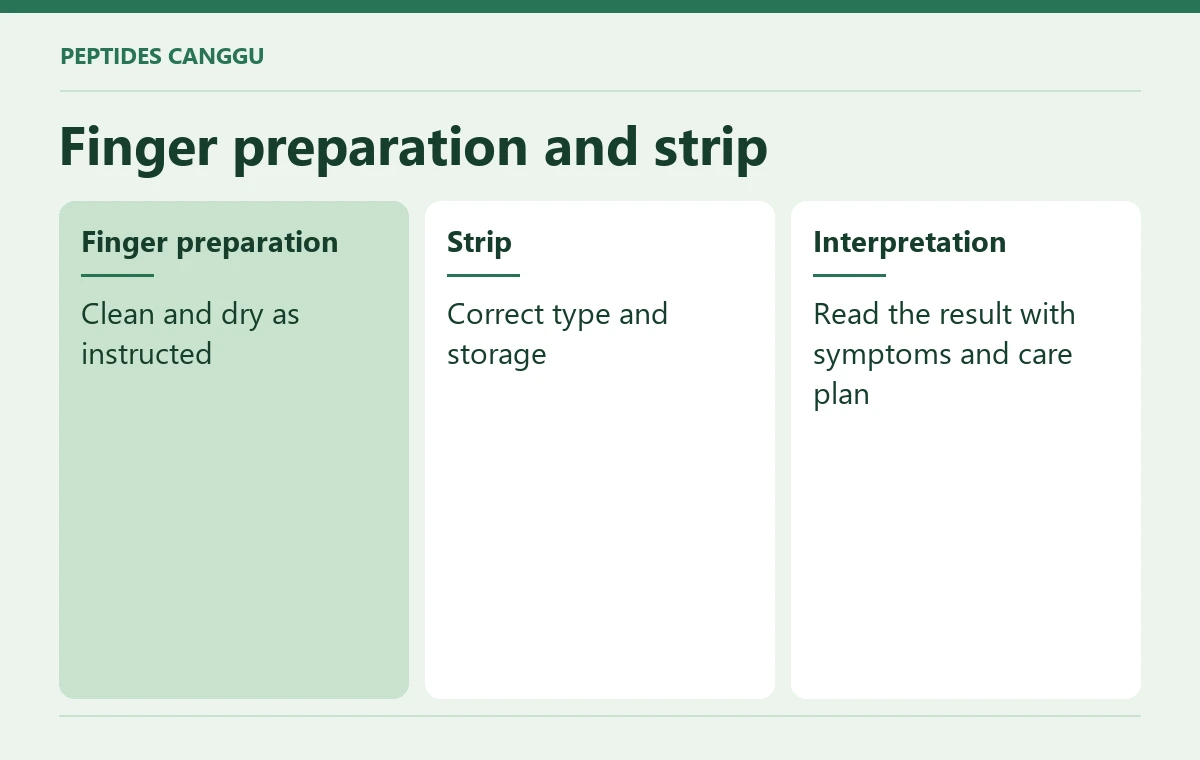
Residue on a fingertip can distort a meter reading. When a result is unexpected, the condition of the sample and the person's symptoms both matter. Follow the prescribed plan for urgent readings or symptoms.
Start with the sampling surface
The FDA advises washing and drying hands before testing and following the specific meter and strip instructions. Sample volume, strip compatibility and storage also matter. A contaminated sample can produce a number without representing blood glucose accurately. FDA on safe use of glucose meters and strips
A glucose strip reacts to the material presented to it. The meter has no separate way to identify a trace of food that reached the sample from the outside of a finger. Washing and drying properly is one controllable part of the measurement. A wet fingertip introduces its own concern after washing. Follow the actual manufacturer's procedure rather than treating a quick wipe as automatically equivalent under all conditions.
A repeat is another observation
A Canggu resident prepares sliced mango, checks a reading and sends a screenshot without the circumstances. Recording the timing of the meal, hand preparation and any repeat done with clean dry hands gives the clinician a more interpretable sequence.
If a repeat is appropriate under the person's care plan, save its time as well as the value. The original high reading and the later result are not two simultaneous independent laboratory measures. Time, hand preparation and symptoms may all have changed. Keeping the sequence gives a clinician more information than discarding the first reading or averaging both.
What to bring to the next review
A meter measures the specimen placed on the strip. A small amount of residue on the skin can therefore matter even if the instrument itself is working within its expected specifications. The converse is important too. A reading from clean hands can still need attention if symptoms point to a serious problem. Do not keep taking repeated measurements until a preferred number appears. Preserve the first result, the conditions under which it was obtained and any repeat recommended in the person's diabetes plan. If discrepancies recur, a professional comparison with the meter present can be more informative than photos of several screens from different times. Share what the person felt and whether the value prompted treatment under their existing plan. Avoid guessing what the circulating glucose must have been solely from the appearance of the finger or the fruit recently handled.
Do not dismiss a concerning result simply because a sampling issue is possible. If symptoms are serious, seek care. Discuss repeated discrepancies with the diabetes team and bring the meter and exact strip container.