Thirty seconds in a chair: why the setup changes the result
A count of chair stands is meaningful only with the method used to obtain it.
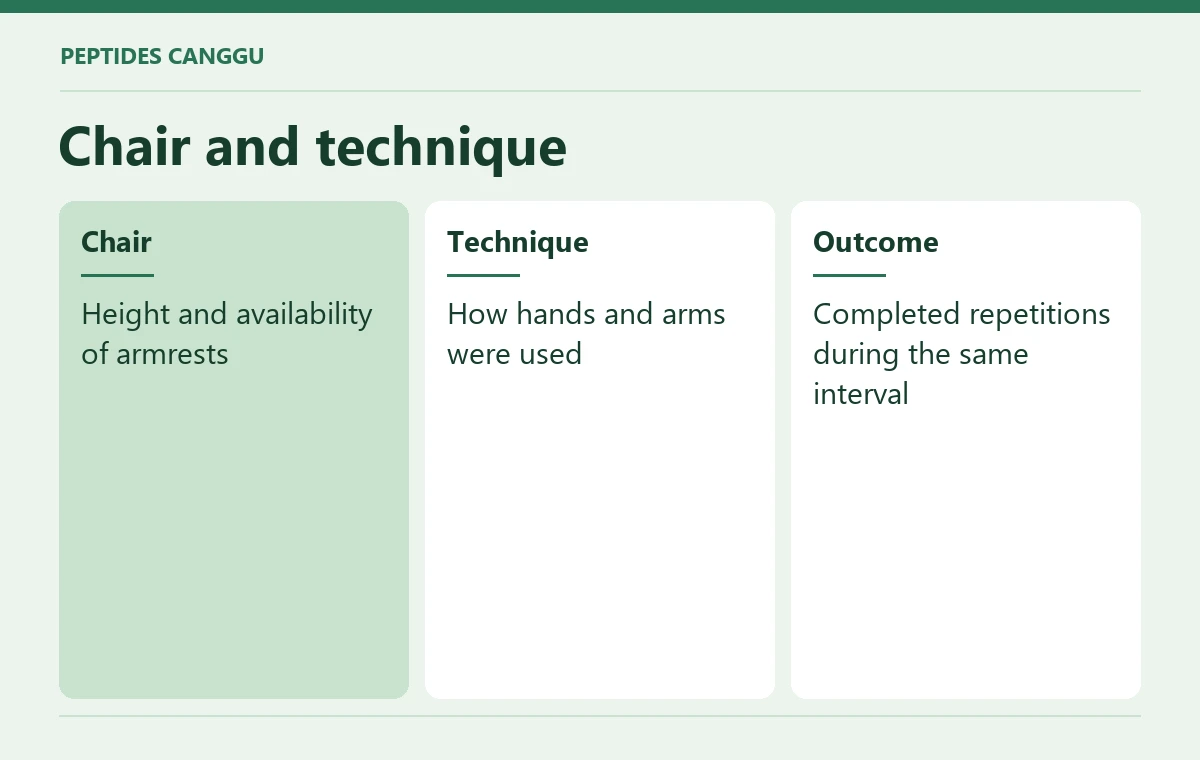
A count of chair stands is meaningful only with the method used to obtain it. Pushing off armrests and rising with arms crossed represent different tasks; the two counts should not form an unlabeled trend.
The starting position changes the task
The CDC STEADI chair-stand assessment specifies a chair without arms and a defined starting position. It was designed for assessment in older adults. Someone unable to perform the standard movement should be evaluated according to the assessor's instructions. CDC STEADI assessment materials including the chair stand
To rise from a chair, a person must move from a seated position to standing. A low soft cushion, a firm seat and a high bar stool present different mechanical tasks. Pushing on an armrest changes how the arms contribute. Someone may sensibly use support in ordinary life while being unable to perform the standard assessment as written. An assessor can record this safely. It should not be hidden in a count that will later be compared as if the two tests had identical conditions.
Ask what a repetition meant
A Canggu resident reports more repetitions at home after changing to a taller chair. A higher count could reflect the setup as well as a change in ability. Note seat type, arm use and whether each repetition met the same definition.
A timed task needs a clear start, finish and rule for counting. If one observer counts a partial movement and another counts only a complete stand, the numerical difference may come from observation rather than improved capacity. Keep the facility's actual instructions with the result, especially when two providers are following the same person. A result on a functional screening tool is not a diagnosis. If the meaningful goal is getting out of a particular chair at home, describe that chair and any assistance needed alongside the standardised score.
What to keep with the result
A chair stand resembles an everyday activity, which is part of its usefulness. That resemblance also makes it easy to overlook the standardisation. A soft seat, a low sofa or a hand pushing against a table changes the demands of the task. If a support was needed, record it rather than hiding it to obtain a higher score. A clinician can learn more from a faithful description of how someone managed than from an apparently precise repetition count.
If an assessor changed the instructions for safety, record the modification. It can be clinically sensible even though it limits numerical comparison with the standard procedure.
Ask the physiotherapist whether both results are comparable and which test fits the person's actual goal. A count alone cannot demonstrate tendon healing or an effect of a peptide blend.