Which time belongs beside each sample in a growth hormone test?
A clinic in Bali may receive several growth hormone results with one identical reporting time. The collection times and procedure notes tell a different story.
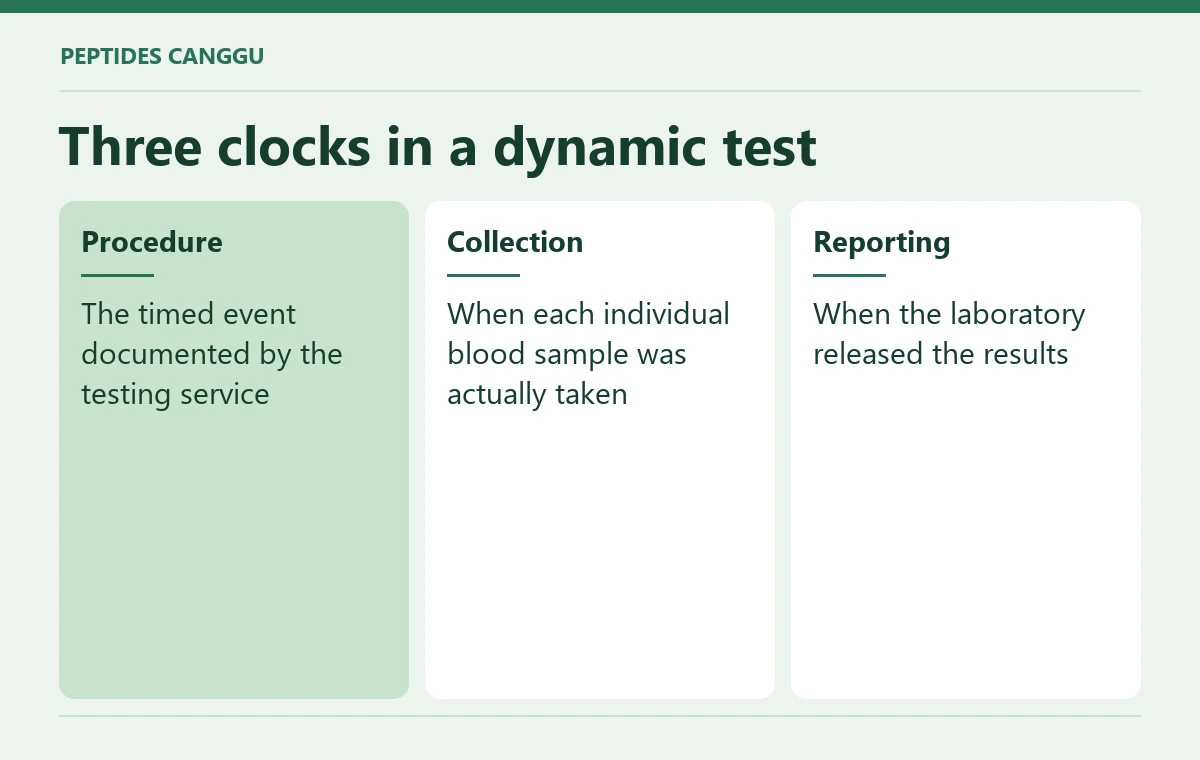
A PDF lists five growth hormone values, all apparently recorded at 16:40. The patient remembers staying at the testing centre for several hours. Both observations can be true. A laboratory may release a whole panel at once even though the individual specimens were collected at different points in a supervised procedure. A graph made from the release times would compress the entire investigation into one minute.
Find the collection clock
Start with the full test name and the date and place of the procedure. Look for the fields called collection time, sample time or the nominal time point. A label such as “baseline” describes a sample's position relative to a defined event. It does not by itself identify the wall-clock time in Canggu or the precise interval that actually elapsed.
The MedlinePlus guide to growth hormone tests describes why clinicians may collect a series of samples during a stimulation or suppression procedure. The clinical questions and the procedures differ. This is also why a single random number copied from a portal is a poor substitute for the full series. Interpretation belongs with the testing method and its clinical context.
Ask for the procedure sheet as well as the results
If the report gives only a sequence of values, ask the original clinic whether the collection log is available. Preserve the sample identifiers, the documented procedure and any note that a collection was delayed, missed or repeated. A planned time written on an appointment sheet should not silently replace an unknown actual time. Do not rearrange the values according to which looks most plausible.
If the test was performed in another country, copy the original local clock times first. Identify the time zone separately if the record is being merged with another timeline. Changing every timestamp to Bali time does not recover a missing interval.
Give the receiving clinician an interpretable record
Send the report, the procedure sheet when available, and a short note identifying any missing fields. Ask the specialist whether the information is sufficient to interpret the investigation. The number on a somatropin carton describes a product presentation. It does not identify the laboratory method or establish the meaning of any measurement in the series. Once the original timings and methods are preserved, the clinician can decide whether any further information is needed.