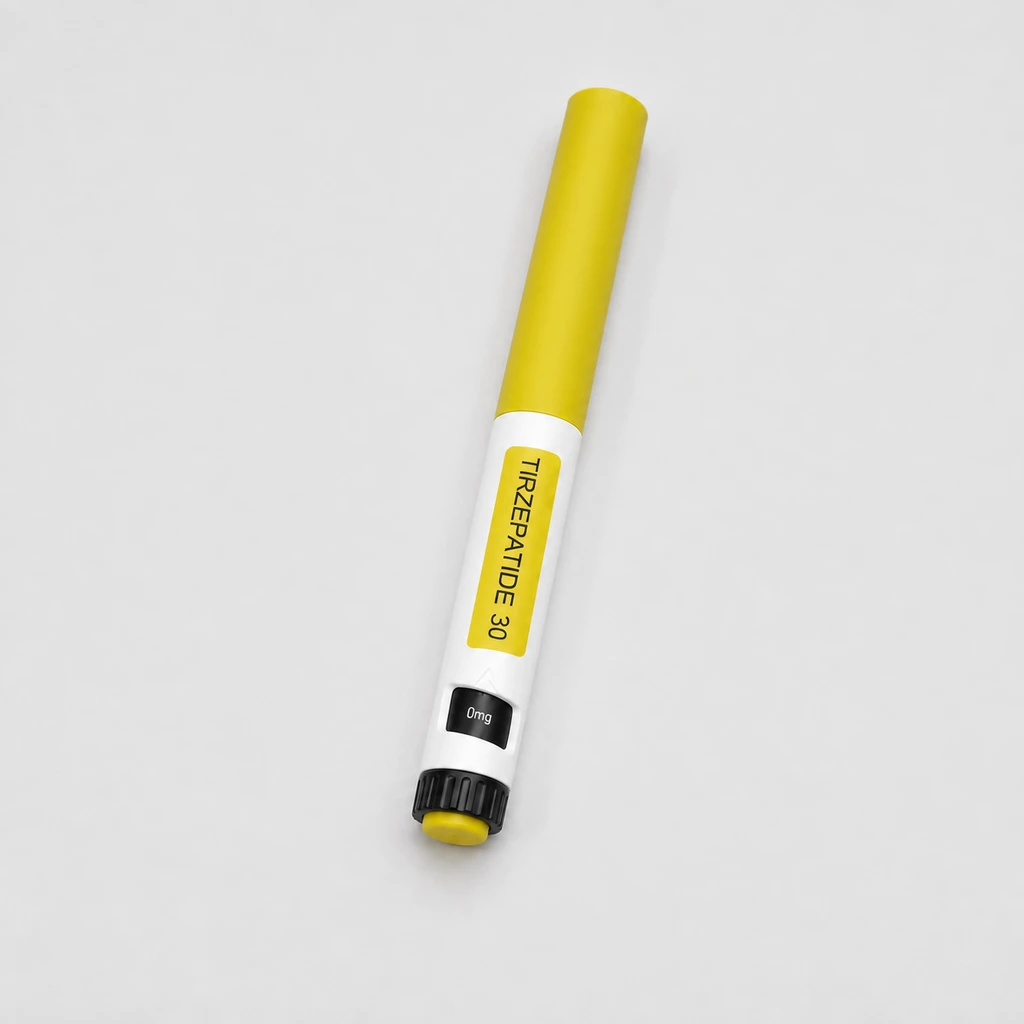
Is tirzepatide listed twice when you change clinics in Canggu?
A brand name, a generic name and two different dates can make one medicine look like two. Here is how to bring the discrepancy to your Bali appointment.
A traveller arrives in Canggu with a discharge summary and a photograph of the pen carton they have been using. The old summary lists a brand. A second clinic has entered “tirzepatide” from a conversation. The printed lists now look like evidence of two medicines. They could describe one current item, two different presentations kept at different times, or an old prescription that was never started. The names alone cannot decide which.
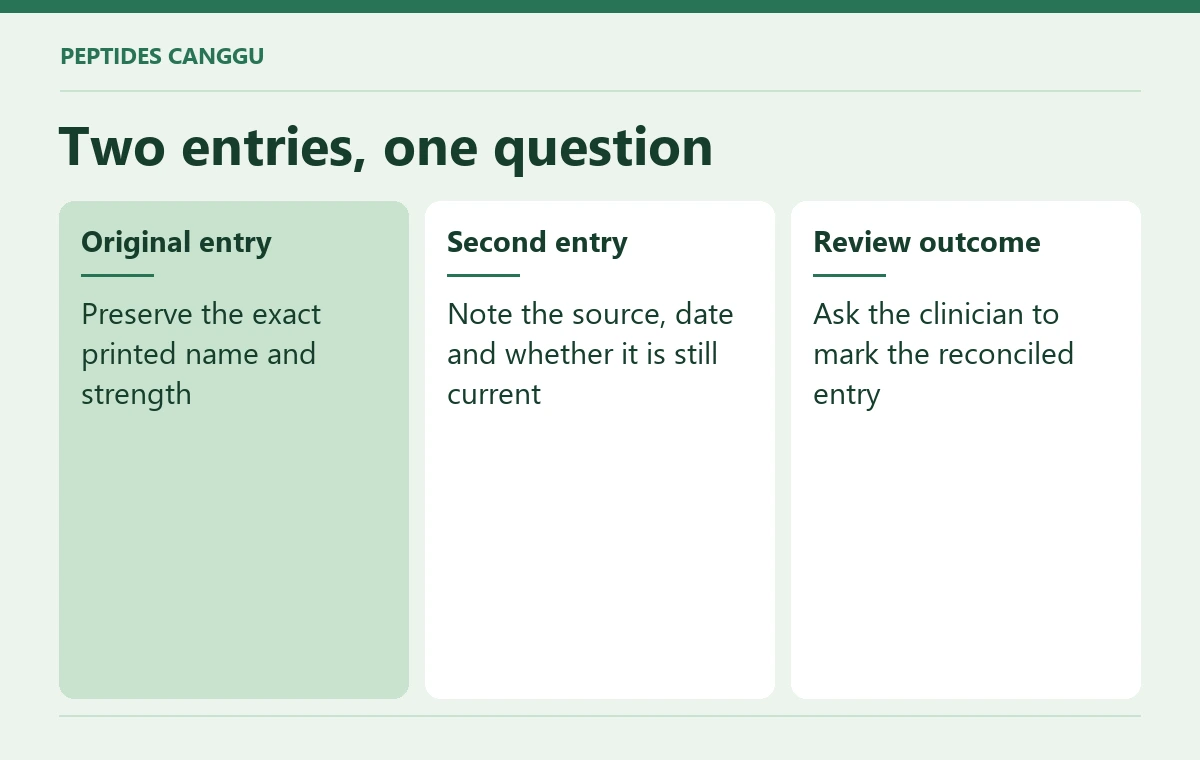
Keep the two original entries visible
Photograph the complete panels that identify the product and its strength, along with the dates on both records. Copy the words exactly, including whether the strength refers to one pen, one millilitre or a particular presentation. A total amount printed on a carton is not a record of what a person took. An invoice establishes a purchase and may identify a variant. It cannot establish use.
Write a sentence in everyday language about the discrepancy. “These two lists use different names and I want to check whether they describe the same item” is more useful than crossing one off or adding both to a current list. Keep a separate note of any uncertainty about when the older entry was last reviewed.
Let the history explain the dates
An issue date may be the day a prescription was printed. A date in a patient portal may record when paperwork was imported. Neither necessarily matches the first or last day a medicine was taken. If you can identify one date accurately but not the other, label them separately. Take the carton or leaflet to the appointment if you still have it.
The AHRQ medication reconciliation toolkit describes comparing medication information across transitions in care and resolving discrepancies. A transfer between a home clinician and a Bali clinic is a practical place to use that principle. Supplements and nonprescription products on another list can also be worth mentioning.
Leave with a list both sides can read
Ask which entry should appear on the current list, under which name, and what happened to the older entry. If the question depends on information from the prescriber abroad, ask who will obtain it. Get a copy of the reconciled list bearing the review date. When a shop or hotel later asks about an item, share only the details needed for that particular task. A product listing can help identify the carton, while the dated clinical list records the treatment discussion.