Taking a skin biopsy result to a dermatologist in Bali
If a lesion was biopsied before you travelled, the final pathology report and its specimen labels are more useful than a cropped diagnosis on your phone.
A visitor in Canggu has two photographs of the same shoulder and a message from a clinic abroad saying that the biopsy result is back. The dermatologist in Bali asks which lesion was sampled. Neither photograph shows the mark the original clinician used, and the cropped message omits the site. A high-resolution photograph cannot repair that gap. The information lives in the clinical note and the pathology report.
Request the final report and the specimen description
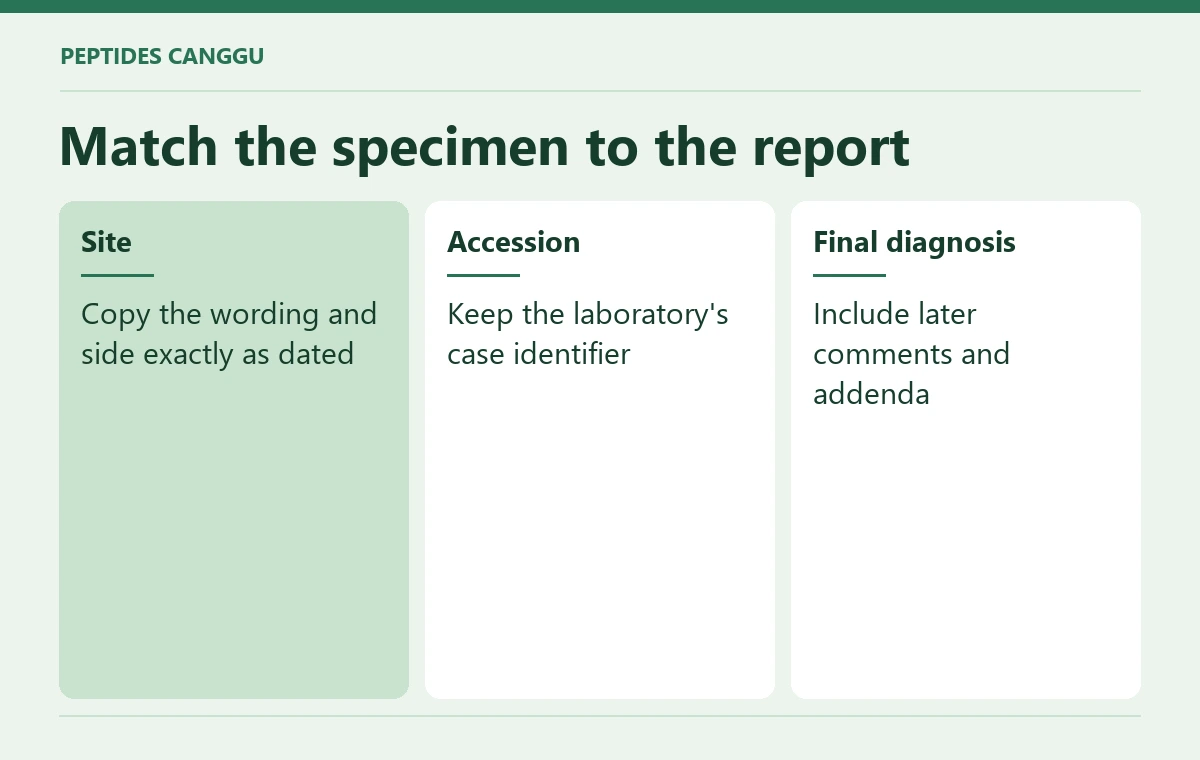
Ask the original clinic for the complete signed report and any later addendum. Keep its laboratory case number, the specimen site and side, and the collection date. Where tissue from more than one place was collected, labels such as “A” and “B” connect each description to a particular specimen. Copy the mapping even if one site seems much less important than the other.
The US National Cancer Institute's guide to pathology reports explains how specimen descriptions, microscopic findings and the final diagnosis fit together. The report can also contain comments or pending tests. A screenshot ending at the first line of the diagnosis may omit the part that explains what is still uncertain.
Keep the photograph in a supporting role
A dated picture of the area can orient the next clinician. Label it as the site you believe was examined and say whether it was taken before or after the procedure. Do not mark a location as confirmed simply because it looks similar to a spot in an old picture. A photograph taken after tanning or a change in lighting can be particularly hard to match. A product name, including a tanning product, cannot tell a clinician which specimen was sent.
Agree on how a second opinion would work
Sometimes the new clinician can proceed from the report. Sometimes a pathologist needs to review the original slides or tissue blocks. Ask the receiving practice what it needs, who may request the material and how it should be transferred. Avoid sending irreplaceable material to an address copied from a general website without confirming the receiving service.
Before leaving the appointment, write down the next decision, who is responsible for it, and whether another report is expected. If you cannot obtain the records promptly, tell the dermatologist what is missing rather than delaying assessment of a changing lesion while you wait for perfect paperwork.