Why a clinician reads GGT beside alkaline phosphatase
Alkaline phosphatase may come from the liver or bone, among other sources.
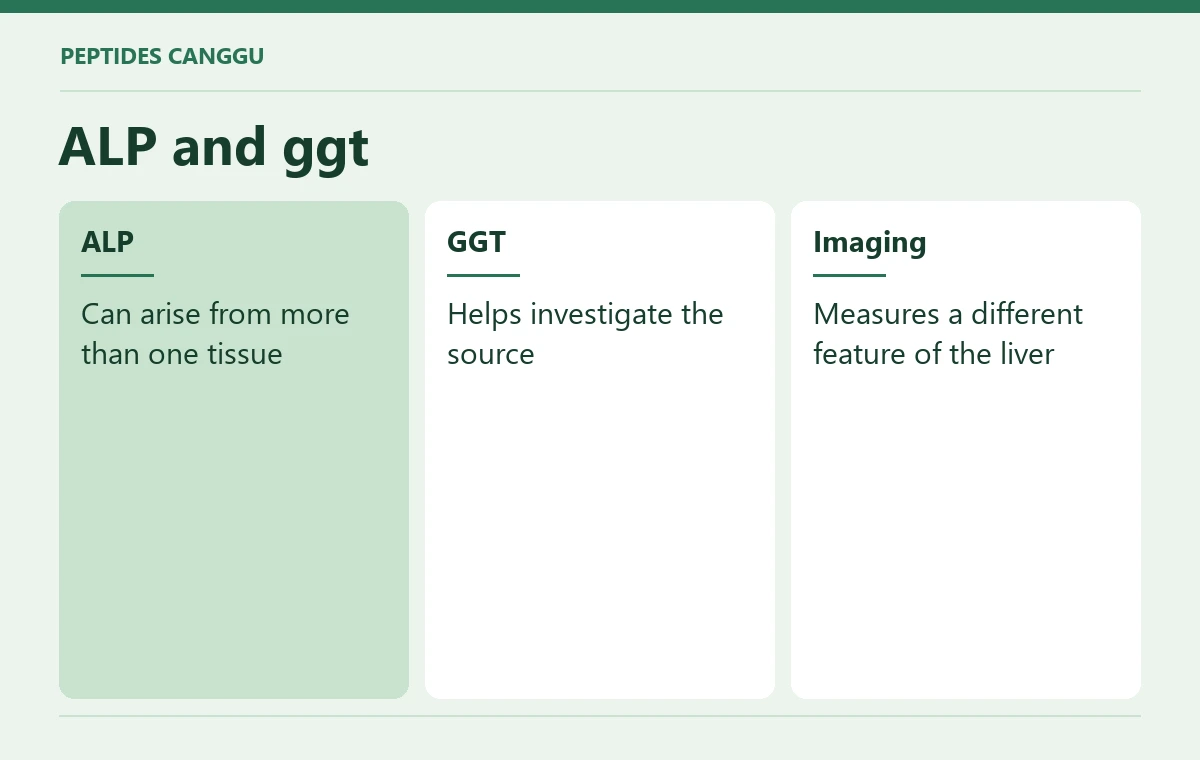
Alkaline phosphatase may come from the liver or bone, among other sources. GGT can help a clinician investigate whether a raised ALP has a hepatobiliary explanation. Neither number identifies a specific diagnosis by itself.
Which tissue could account for the result?
MedlinePlus describes GGT as one of the tests used with ALP when looking for the source of an elevation. Medicines and alcohol can affect interpretation. Both tests are distinct from an imaging measurement of fat in the liver. MedlinePlus on GGT testing MedlinePlus on alkaline phosphatase
ALP is a family of enzymes found in several tissues. The fact that a value appeared on a liver panel does not establish that the liver supplied it. A GGT result can help an assessor place ALP in context alongside other blood tests and the history. It does not label a precise obstruction, identify a particular medicine or substitute for an examination. If a laboratory reports a normal interval next to GGT, make sure the neighbouring printed interval actually belongs to that analyte. Cropped screenshots can bring rows into misleading alignment.
Three separate dates can be relevant
Two clinic reports show similar ALP values but only one includes GGT. A blank is not a normal GGT result. Retain the full panels, their local reference intervals and dates. Include changes in medicines and any relevant symptoms in your history.
Write down the dates when symptoms began, the blood was drawn and any medicine changed. A drug first taken after the blood draw cannot explain a result already present in that sample. A previous value from before symptoms appeared can be useful even if no GGT was measured at that time. It simply belongs to an incomplete, earlier panel. If the clinician is deciding whether a new abnormality persists, they may need the full historical sequence, including results that were within range. A folder containing only the flagged values will make the change look more abrupt than the records justify.
When sharing the finding
If you have results from two laboratories, the printed upper limits can differ. Copy the reference range from the same page as each number. A highlighted value with the limit cropped away makes it difficult to judge the size of the departure from that laboratory's interval. Keep the other liver tests from the same specimen visible as well.
If one service reported an enzyme under a different abbreviation, ask it to identify the specific measurement before treating the two abbreviations as synonyms.
At a Canggu review ask what the combined pattern suggests and which other information would discriminate between possible sources. A lower or higher liver-fat percentage in a study cannot fill an absent blood result.