Why a C-peptide result needs the glucose measured with it
C-peptide is released when the body produces its own insulin.
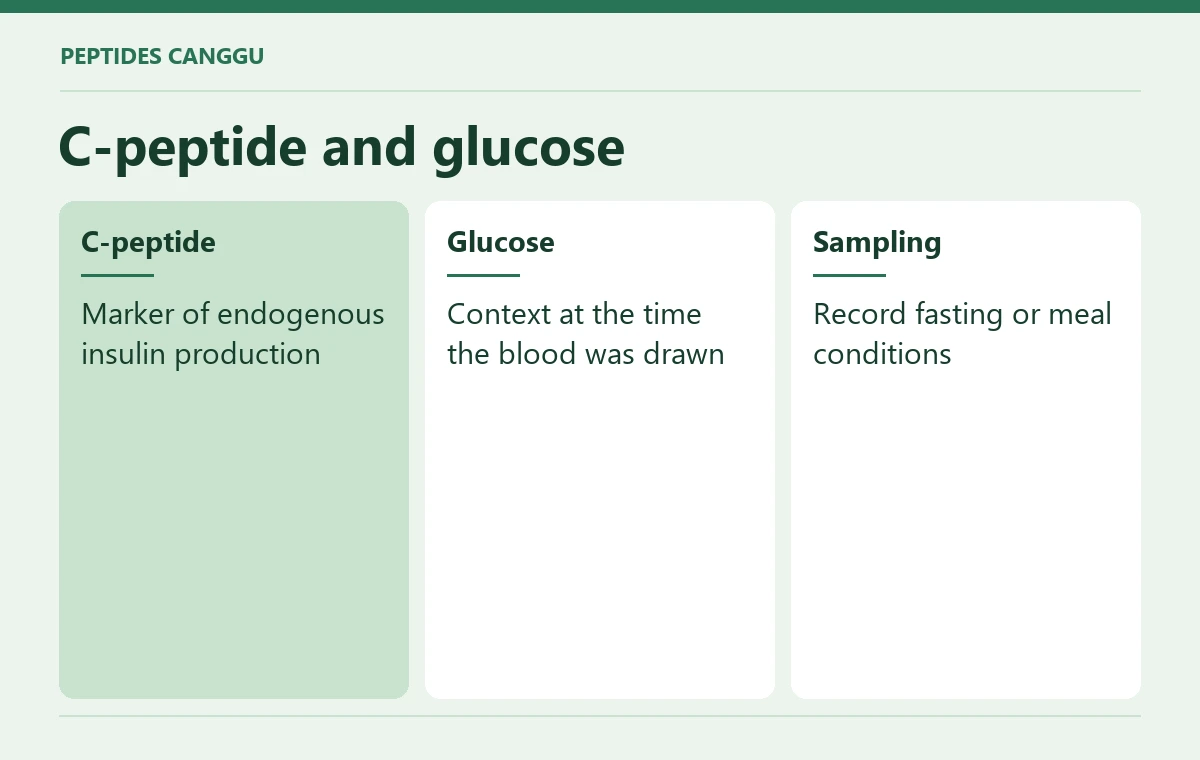
C-peptide is released when the body produces its own insulin. Read the result beside the blood glucose and sampling conditions before treating two laboratory measurements as comparable.
When was the pancreas being asked to make insulin?
MedlinePlus describes fasting blood testing as one possible approach. C-peptide helps assess how much insulin the body is making even when a person also receives injected insulin. Clinical interpretation depends on why the test was ordered. MedlinePlus on C-peptide testing
Insulin and C-peptide are released together when the pancreas processes the precursor to insulin. The glucose level is part of the stimulus for that process. A concentration seen when glucose is low and the same concentration measured when glucose is high can therefore raise different questions. Knowing only whether the laboratory printed a flag leaves out that relationship. Check whether both results belong to the same blood collection. A fingerstick recorded at home several hours beforehand is useful history, but it does not supply the missing glucose concentration in that laboratory sample.
What the date on the report means
At a clinic in Canggu one report comes from an overnight fast, another from after breakfast. A “low” flag on one line cannot identify a diabetes subtype in isolation. Write down the meal and medicines taken that morning; do not change them to reproduce the comparison.
The scheduled appointment, blood collection and laboratory release may fall at different times. If breakfast came between the home measurement and the draw, the two numbers do not describe the same moment even if both appear under the same date in an app. A clinician may also consider the reason for measuring C-peptide in the first place. Investigating unexplained low glucose and assessing residual insulin production in someone with known diabetes are different clinical questions. Keep the requested test description with the result and leave decisions about preparation and interpretation to the ordering team.
What to keep with the result
A result expressed in a concentration unit describes the sample that reached the laboratory. It cannot recreate the glucose signal to the pancreas hours earlier. If the form shows glucose on another date, leave that distinction visible. Ask the practice to pull up the contemporaneous result rather than matching two records simply because the patient name is the same.
If two results came from different visits, identify what they genuinely share, such as testing method or time after a meal, and leave each unmeasured glucose concentration explicitly unknown.
Bring the original glucose measurement from the same collection and ask whether the two tests actually represent the same physiological conditions.