Dizzy on standing in Canggu? What the two blood pressures mean
A single seated pressure can miss a change that appears when someone stands.
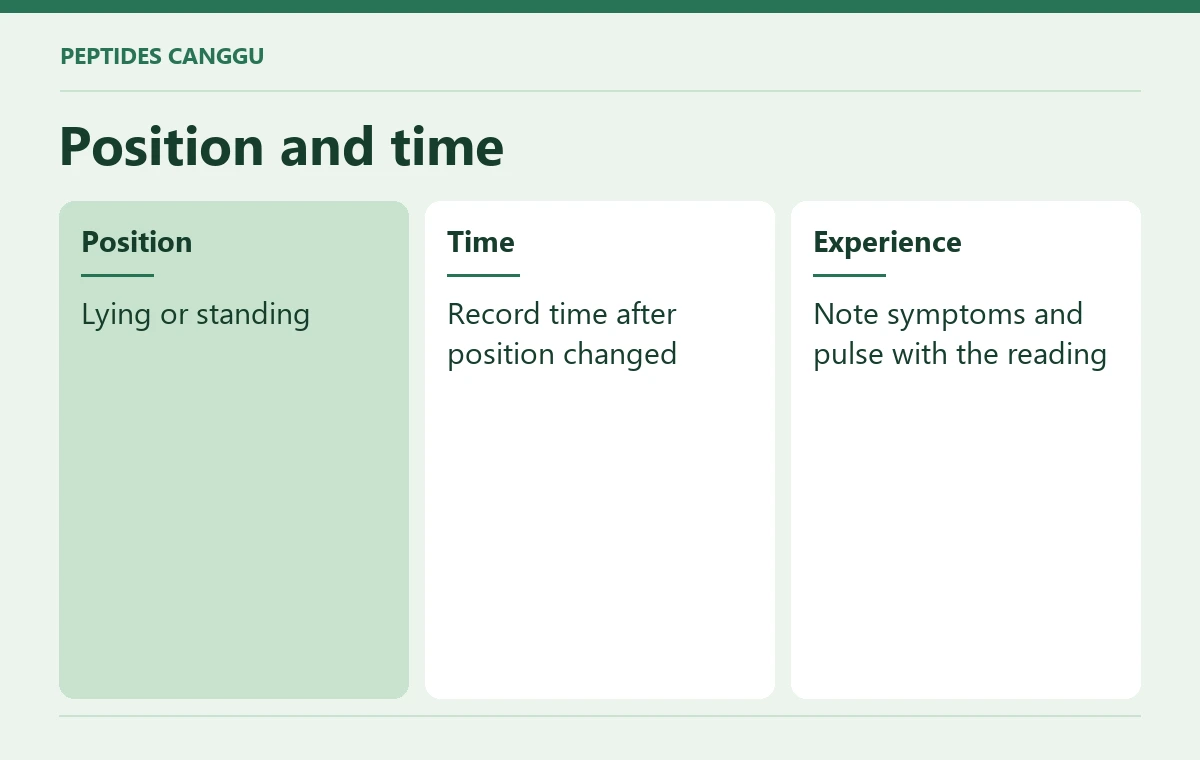
A single seated pressure can miss a change that appears when someone stands. The history, position, pulse and timing belong beside the numbers when recurrent light-headedness prompts a clinic visit.
The clock begins with the change of position
CDC's clinical assessment measures blood pressure and pulse after five minutes lying down and repeats them after standing for one and three minutes. The symptoms and timing contribute information even when the two pressure numbers are close. CDC orthostatic blood pressure assessment
A pair of otherwise accurate readings can fail to answer an orthostatic question. Suppose the first was taken while resting before an appointment and the second after a walk across the clinic. The interval includes walking, waiting and perhaps anxiety as well as standing. It is no longer the comparison described in the CDC assessment. Copy each observation into a separate row with position, elapsed time after standing, pressure, pulse and symptoms. This preserves what was actually observed and makes the gaps obvious without turning a later comfortable reading into a measurement at the time of dizziness.
Why pulse and symptoms travel with the measurement
For a visit in Canggu, a traveller who felt faint on standing after lunch may have only a seated reading sent by their hotel later that afternoon. It is a useful observation, although it does not capture the position change. A fall risk or recent fainting makes supervised assessment particularly important.
Someone may describe lightheadedness, unsteadiness or a sensation that the room is spinning. Those words describe different experiences; use the person's own description rather than forcing the symptom into a measurement category. It is also worth recording whether they had to sit down before the planned reading. A missing standing value after someone felt unsafe is important information. An assessor can decide how to proceed safely rather than asking a person at risk of a fall to stand alone again to complete a home spreadsheet.
Which comparison belongs in your notes?
When you report an episode, describe what you were doing as precisely as the measurement. Getting up from lying flat after sleep and standing after a long meal are two different situations. If the reading was taken after symptoms settled, state that explicitly. It avoids giving a later figure more explanatory weight than it has.
The record can include that staff assisted with the assessment. A safely interrupted attempt is more informative than a guessed value entered for the missing standing measurement.
Describe whether symptoms started on standing and resolved on sitting or lying down. Seek urgent medical help for fainting with chest pain or new neurological symptoms. Discuss the circumstances rather than assigning the episode to a peptide or the weather.