A Bali thyroid panel after a hair vitamin containing biotin
A supplement may affect the method used by a laboratory without changing thyroid hormone production itself.
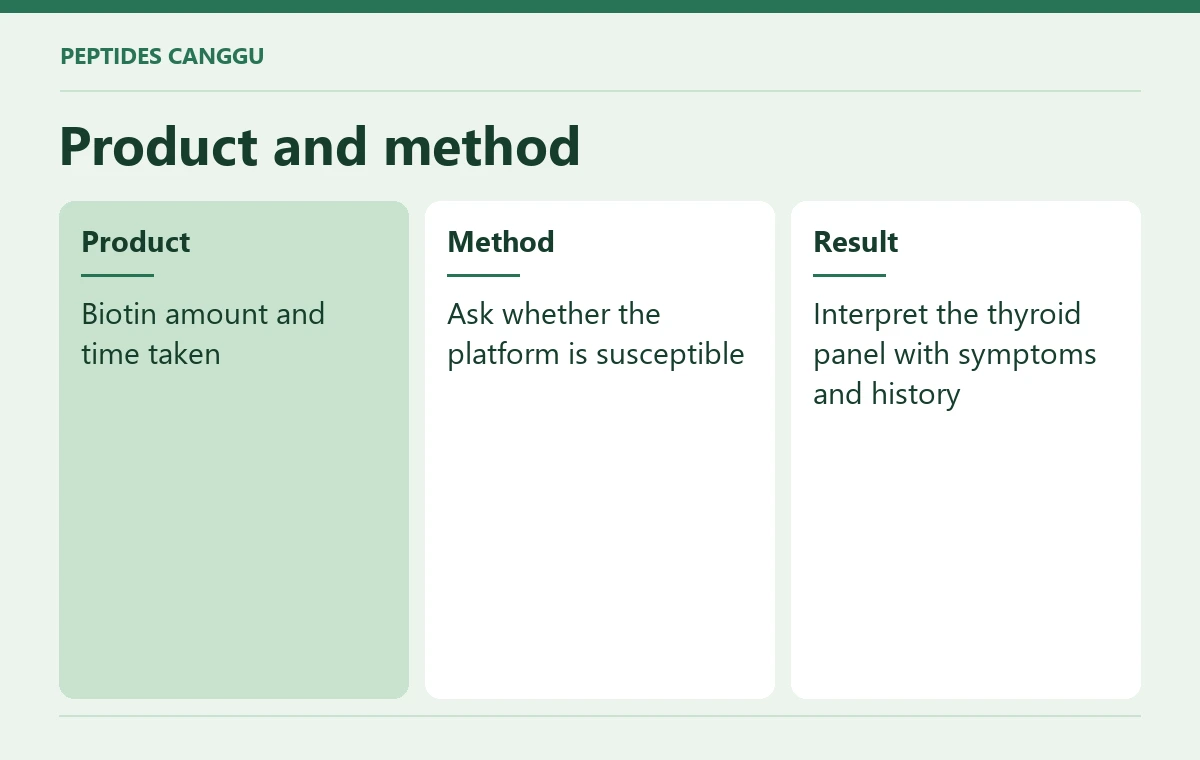
A supplement may affect the method used by a laboratory without changing thyroid hormone production itself. Biotin is a well-documented example. Its presence belongs on the medication list even if a packet is sold as a hair or nail vitamin.
When the test method becomes part of the history
NIH and the American Thyroid Association describe interference with certain biotin-based assays. Depending on the method, measured TSH can appear low while thyroid hormone results appear high. Other platforms may respond differently. NIH fact sheet on biotin and assay interference American Thyroid Association on thyroid function tests
A thyroid panel measures several substances with separate assays. An interference can move the reported result in one direction for one assay and in the opposite direction for another. The result can resemble a biologically coherent pattern even though the analytical process is contributing to it. That is why one suspicious combination deserves investigation rather than a diagnosis from a screenshot. Keep the exact supplement strength and whether one serving on the packet means one capsule or several. A tablet's front label may describe a daily serving rather than what was actually taken.
How a repeat helps answer the right question
Imagine a Canggu resident who feels well but brings discordant results from two facilities. Keep both reports and photograph the supplement's ingredient and serving panels. The brand name alone may obscure biotin or the amount per daily serving.
A result obtained on a different platform can be informative if the laboratory identifies which platform was used and how it handles biotin. Simply choosing whichever value looks more reassuring does not resolve the difference. Ask which tests were affected and which markers on the panel remain interpretable. A consistent result from one laboratory on two occasions and a single result from a second method are different patterns. Keep the original reports so the clinician can see that structure.
Read the result in its original setting
Ask the laboratory to keep its interpretive comment attached if it issues an amended result. A corrected value for the same specimen, a fresh sample on a different platform and a later sample analysed in the original laboratory are three distinct comparisons. A file bearing today's date could still concern last week's blood draw. The ingredient strength, number of servings used and time of the last use can help the team investigate interference. Only the responsible clinician and laboratory can determine which details change the plan for retesting.
Ask the laboratory and treating clinician which assay was used and how to arrange any repeat. A suspicious pattern is a reason to investigate; it does not establish hyperthyroidism or justify changing prescribed therapy.