Is a flat post-acne mark the same as a scar?
A flat area of colour after acne and a scar with altered skin texture are different findings.
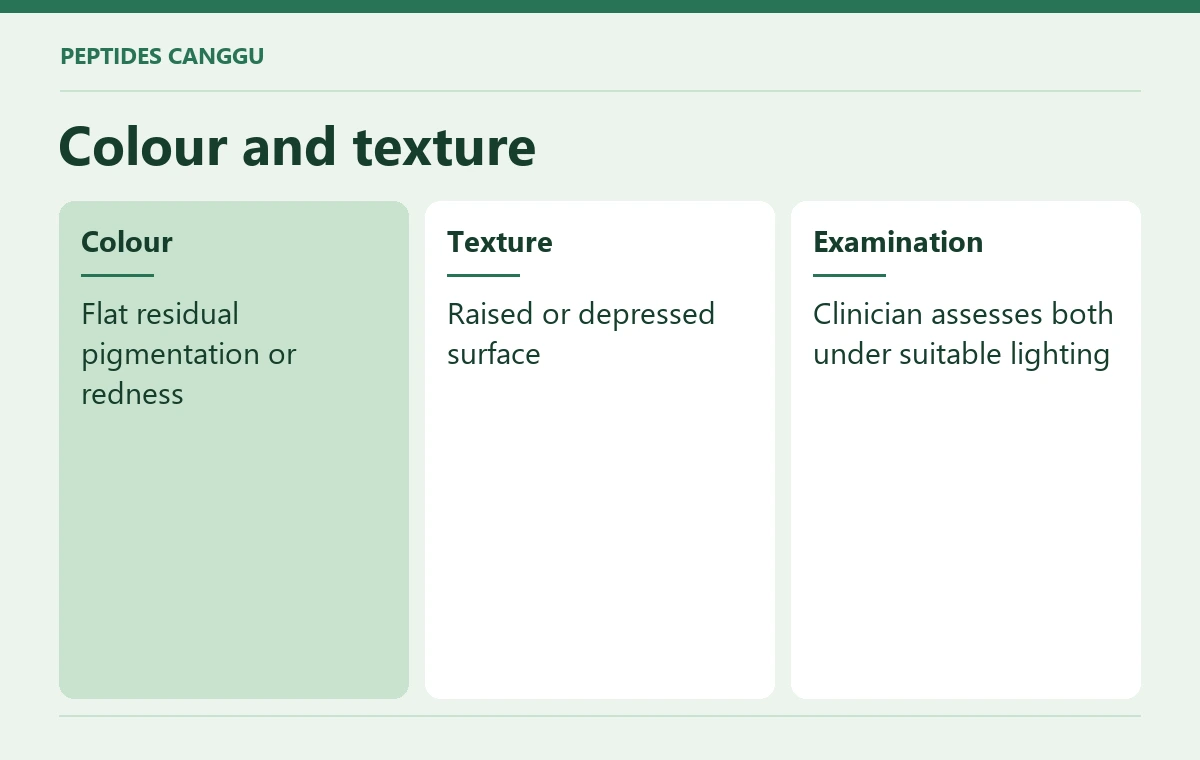
A flat area of colour after acne and a scar with altered skin texture are different findings. Distinguishing them makes a consultation about skincare in Canggu more useful than calling every lasting mark a scar.
Separate pigment from surface contour
The AAD describes depressed and raised acne scars. Flat spots of colour left after acne often represent post-inflammatory changes rather than a permanent textural scar. A photo alone may not reveal a shallow depression. American Academy of Dermatology on acne scars and flat marks
A flat patch is a change in colour on skin that remains relatively level. A depression or raised area changes how light and shadow fall over the surface. Both can occur after acne, and a single area can have a colour change as well as an altered contour. Ask whether the main concern is persistent colour, uneven texture or new inflamed lesions. The answer determines what a photograph should try to document and what a dermatologist needs to examine directly.
Why different photographs can tell different stories
Compare photographs taken under frontal light and under light from the side. A shadow can exaggerate an indentation; a flat patch can look darker with a different exposure. Describe whether the surface feels or looks indented, raised or simply a different colour without repeatedly rubbing irritated skin.
A flash close to the lens can make shadows disappear. Side lighting can make a shallow change in contour appear deeper. Wet skin, make-up and camera processing add other differences. These are useful observations about the pictures rather than proof that the skin changed between them. If preparing images for an appointment, include a photograph from a comfortable distance showing the affected region and a closer one without a filter. Keep the date and note whether an active breakout was present. The goal is to preserve a reliable record of appearance for discussion, not to diagnose a scar subtype from a phone display.
What the details change
A description such as “new brown patch after the spot flattened” is easier to compare over time than a product category or a photograph labelled only “scar.”
A person may be troubled by a flat colour difference even when no depression is visible. That can still be a worthwhile reason to seek a consultation. Describing the actual concern helps the dermatologist discuss appropriate outcomes without treating every photograph as a measure of tissue repair.
Show the dermatologist the original acne history, current products and any stable photographs. A copper peptide ingredient claim does not identify which type of mark is present or which procedure would suit it.