Your lab emailed a corrected result in Bali. Should both numbers go on the chart?
A revised report can look like a second blood test when it is imported into another clinic's system. Start with the specimen number and the field that changed.
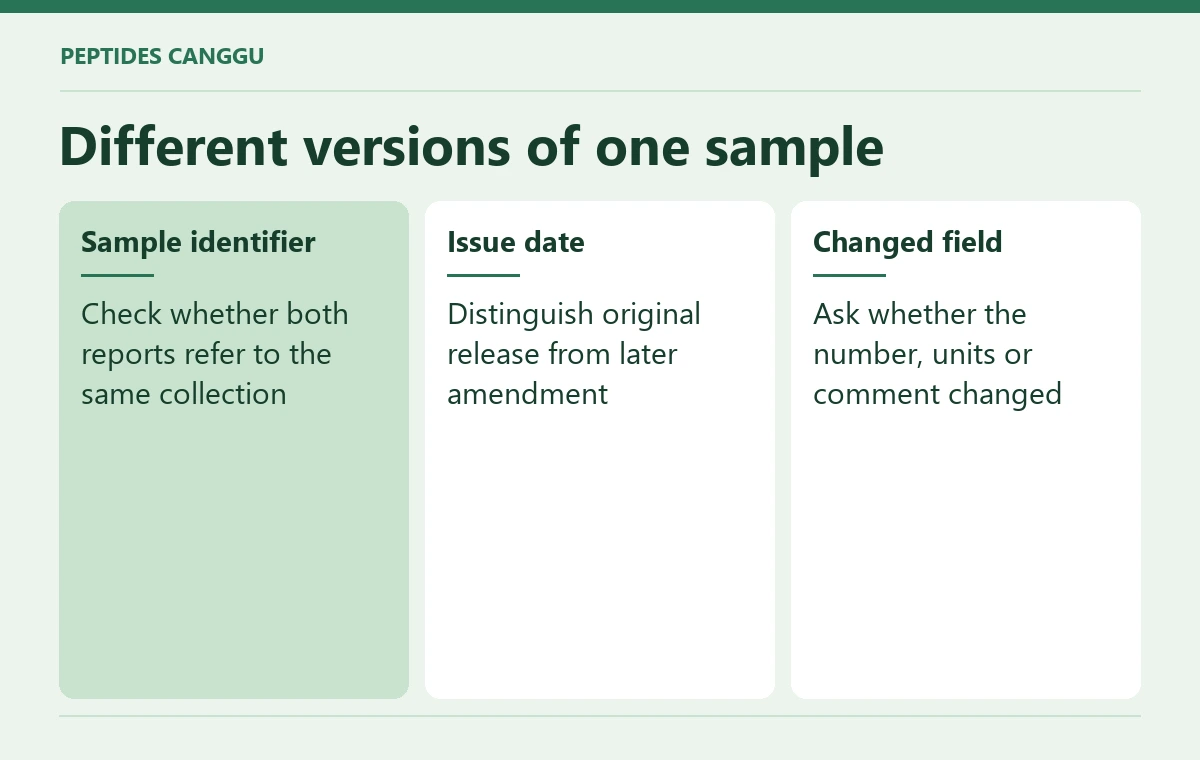
Two emails arrive a week apart. Each has a different issue date and both show the same hormone test. A patient in Canggu enters the numbers in a tracking app and sees what looks like a sharp change in a week. Then the laboratory explains that the second document is an amended version of the first examination. The chart has accidentally turned a correction into a second biological event.
Compare the identifiers before the values
Look for the specimen or accession number and the collection date on both reports. Use the laboratory name as well. Numbers from different laboratories can follow unrelated numbering systems. If the identifiers do not match, ask the reporting service whether the documents refer to separate samples. When the collection and case match, look for words such as “corrected,” “revised” or “amended.”
A later document may correct a numeric value, a unit, a reference interval, a patient detail or an interpretive comment. These are different changes. A revised comment may alter how a clinician understands an unchanged value. Conversely, a corrected number should not be plotted beside the original number as though each came from a new blood draw.
Request a short account of the correction
Contact the laboratory through the details supplied by the ordering clinic. Ask which fields changed, which version is final and whether the ordering clinician received the amendment. The WHO laboratory quality management handbook provides the broader context for reporting, document control and managing errors. Your practical aim is to understand this particular report, not to infer a fault from a changed date alone.
Keep both versions clearly labelled in your files. For a transfer from a clinic abroad, record any time-zone difference between the sample date and the date the email appeared in Bali. A file creation timestamp generated when you downloaded a PDF is a third date and rarely the right point for a laboratory trend.
Correct the clinical handover too
If you already shared the first result, pass the replacement to the same clinician and say explicitly that it revises the original sample. Ask whether any advice based on the first version needs review. Keep the confirmed final value for that collection date on your personal trend chart. Starting a new line for a genuine repeat blood draw then preserves the difference between a laboratory correction and an actual change over time.