Total serum protein is not yesterday's protein intake
Total protein on a blood panel summarises proteins circulating in serum.
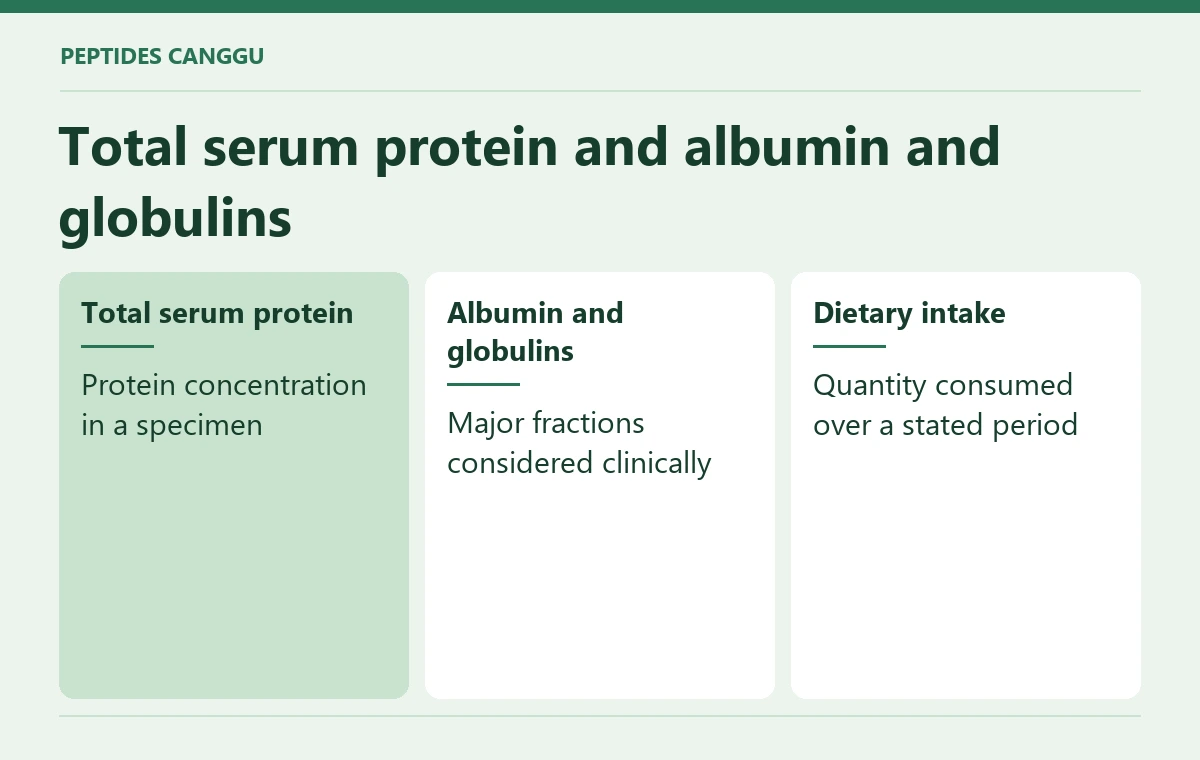
Total protein on a blood panel summarises proteins circulating in serum. It is not the number of grams of protein a person ate yesterday and cannot be converted into a dietary target.
Concentration and intake have different denominators
MedlinePlus describes albumin and globulins as the major groups assessed by total protein and the albumin-to-globulin ratio. The result can be influenced by medical conditions and fluid balance. Evaluating nutritional intake needs different information. MedlinePlus guide to total protein and albumin/globulin ratio
A food diary describes a quantity actually eaten across stated meals or days. The serum report measures the concentration of proteins already present in the blood specimen. The proteins in blood are regulated by processes including production, distribution and losses. The laboratory therefore cannot function as a receipt for the previous day's meals. Retain the actual foods and portions when someone needs dietary information. A low or high concentration is a clinical observation, not a direct calculation of the number of grams a person should eat.
Which fraction changed?
A Canggu resident with a changed appetite compares grams per litre on a lab report with grams per day in a food diary. The shared word grams obscures different denominators and biological questions. Keep the laboratory findings separate from the actual meals and portions.
Albumin and globulins are broad groups within total serum protein. Two people can have a similar total with different contributions from those groups. If the report supplies albumin, total protein and a ratio, keep them together and avoid substituting a ratio for a concentration. A ratio is always based on two quantities, and a change can reflect either or both. A condition that changes fluid balance can also alter a measured concentration. A clinician will interpret the panel using the circumstances of collection and the reason it was ordered.
The question for the next appointment
A serum concentration has a volume in its denominator. Dietary protein intake is recorded across meals over a period of time. No direct multiplication turns the former into the latter, because the body is not a single container holding yesterday's meal. The two records can both be useful while answering separate questions.
The phrase more protein might describe a laboratory concentration rising or a person adding protein to meals. Spell out which meaning you intend when communicating across languages or forwarding results to a new clinician.
Bring any relevant liver or kidney history and symptoms as well as a realistic food record. Ask which component of the blood panel is driving the question and whether a dietitian or additional testing is appropriate.