Urine ketones and blood ketones at a Canggu appointment
A urine dipstick and a blood ketone result use different specimens and can reflect different ketone bodies.
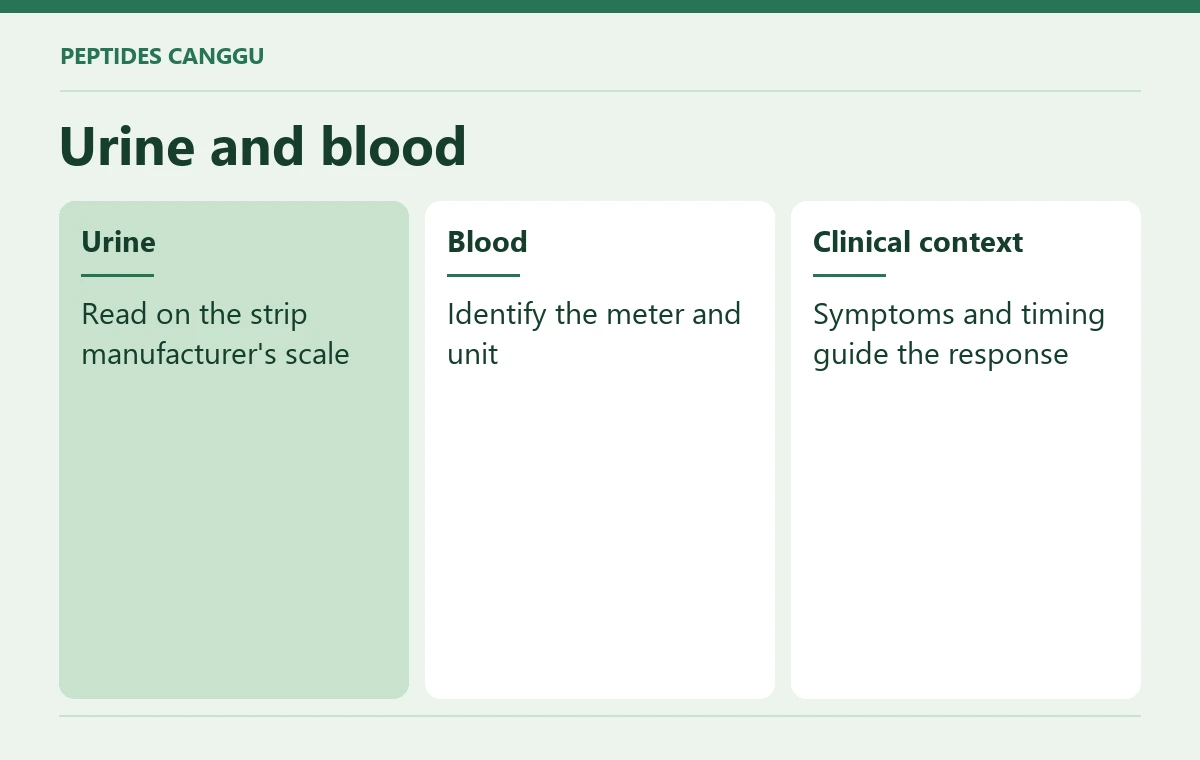
A urine dipstick and a blood ketone result use different specimens and can reflect different ketone bodies. The labels small or large on a urine strip cannot simply be converted into a blood meter number.
A colour category is not a blood concentration
MedlinePlus describes ketone testing in blood or urine. Ketones can appear in several settings. In someone with diabetes, high ketones and symptoms of diabetic ketoacidosis can be an emergency; interpretation depends on illness, glucose and the clinical context. MedlinePlus guide to ketones in blood
Urine strips report categories by comparing the colour that develops with the manufacturer's scale at the instructed time. A blood ketone meter reports a measurement in its specified unit. The tests can detect different ketone bodies, and urine collected at one time has a different biological history from a fresh blood specimen. A small label on a strip cannot be translated into a single blood concentration merely by choosing a number that sounds small. Keep the specimen type with the result.
Clarify the question being asked
At a Canggu clinic, a visitor might show yesterday’s urine strip photograph from the hotel beside a blood ketone result the clinic obtained this morning. The first step is to identify specimen, time and method. A colour scale from one strip brand is not the legend for a blood meter.
In a dietary discussion someone may be interested in ketone production after fasting. In a person with diabetes who is unwell, ketones can be part of an urgent assessment for diabetic ketoacidosis. Those situations have very different clinical implications. A casual explanation about diet should not override a sick-day plan or delay help when serious symptoms develop. If more than one measurement is available, give the clinician the dates, actual readings, glucose information and medicines used. That allows them to interpret the sequence without presuming the reason the ketones appeared.
What to keep with the result
Recording an apparent disagreement between two tests is more useful than trying to erase it. Keep the brand and time of the urine strip reading with its own chart, then record the blood measurement using the device's displayed unit. If symptoms started between the two measurements, add that time as well. The treating team can use this sequence without mistaking separate specimens for a pair taken at one instant.
If symptoms or the care plan call for urgent action, do not wait to find the manufacturer's colour chart before contacting medical care.
Follow the individual diabetes sick-day plan and seek urgent care for symptoms such as vomiting with difficulty breathing or confusion. Bring the measurement times and medicines, rather than delaying help to make two different readings agree.