Tirzepatide and Liver Fat: MRI Results for Bali Readers
Explore the liver-fat reductions measured in SURPASS-3 MRI, how MRI-PDFF differs from body weight and the tirzepatide pen formats offered in Canggu, Bali.
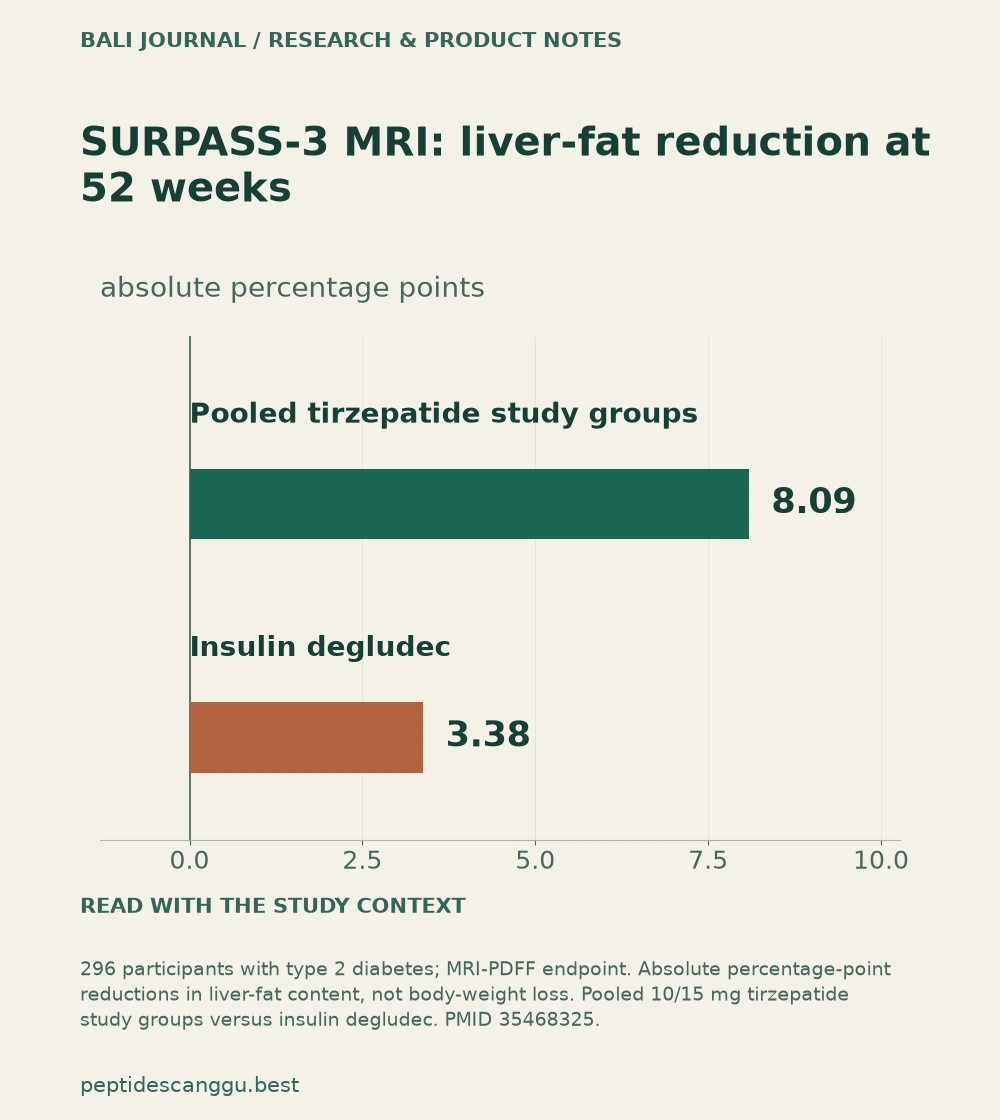
Tirzepatide has been studied for changes in liver fat as well as body weight. In SURPASS-3 MRI, the pooled higher-dose tirzepatide groups had a greater reduction in liver fat than the insulin-degludec group after 52 weeks. That finding adds a specific imaging outcome to the compound's metabolic research profile.
For people researching tirzepatide and liver fat in Canggu or elsewhere in Bali, Indonesia, the useful guide explains what the scan measured and keeps that outcome separate from a change in body weight. Our catalogue's 30 mg and 60 mg pre-filled pens provide defined product presentations to compare after you understand the ingredient-level research.
The study behind the liver-fat result
SURPASS-3 MRI was a substudy involving 296 adults with type 2 diabetes and a fatty-liver index of at least 60. Researchers used magnetic-resonance imaging to assess liver fat and abdominal adipose tissue over 52 weeks.
The primary comparison pooled the tirzepatide 10 mg and 15 mg study groups and compared them with insulin degludec. Mean liver-fat content at baseline across the population was 15.71%. The absolute reduction was 8.09 percentage points in the pooled tirzepatide groups and 3.38 percentage points with insulin degludec.
The publication also reported changes in visceral and abdominal subcutaneous fat. Its value is the defined imaging evidence: the investigators measured particular fat compartments rather than assuming that every change in body weight describes the same biological outcome.
Percentage points are the key to reading the chart
A reduction in liver-fat percentage is different from a percentage reduction in body weight. If an imaging measurement falls from one percentage to another, the difference between the two is expressed in percentage points. That unit needs to stay attached to the number.
The 8.09 figure from this study is therefore an absolute change in the liver-fat measurement, not a claim that participants lost 8.09% of their body weight. The comparison with insulin degludec also belongs to the specific study population and design.
| Result component | Meaning in this study |
|---|---|
| Imaging method | MRI-proton density fat fraction, or MRI-PDFF |
| Follow-up | 52 weeks |
| Participants | Adults with type 2 diabetes meeting the substudy criteria |
| Main tirzepatide comparison | Pooled 10 mg and 15 mg study groups |
| Absolute liver-fat reduction | 8.09 versus 3.38 percentage points |
Keeping those details together makes the result easier to understand and harder to confuse with an unrelated headline.
Why an imaging endpoint adds useful information
Body weight tells you how much a person weighs. A liver-fat scan answers a more specific question about a particular tissue. Waist circumference and other body-composition measurements add further information, but they are not direct substitutes for one another.
This is one reason tirzepatide's research programme attracts attention: scientists can examine changes across several metabolic outcomes using different measurement methods. The strongest explanations identify the endpoint instead of turning all the data into a single general “fat-burning” claim.
For a reader comparing options during a Bali stay, understanding the measurement gives you a more useful conversation with your clinician. You can ask about the relevance of liver-fat findings to your own history and which measurements, if any, would be appropriate for you.
Where the dual-receptor explanation fits
Tirzepatide acts at GIP and GLP-1 receptors, placing it in a nutrient-responsive signalling discussion that includes appetite, glucose regulation and body-weight research. The liver-fat substudy contributes a clinical outcome to that wider picture.
The mechanism and the scan answer different questions. Receptor activity explains why researchers investigate the compound. Imaging shows what happened to a defined endpoint under the trial conditions. A product listing then tells you what presentation is actually being offered.
That three-layer distinction is practical. It lets you appreciate a positive research finding without assuming that the ingredient name alone establishes the quality, contents or suitability of every supplied product.
Compare a named tirzepatide presentation in Canggu
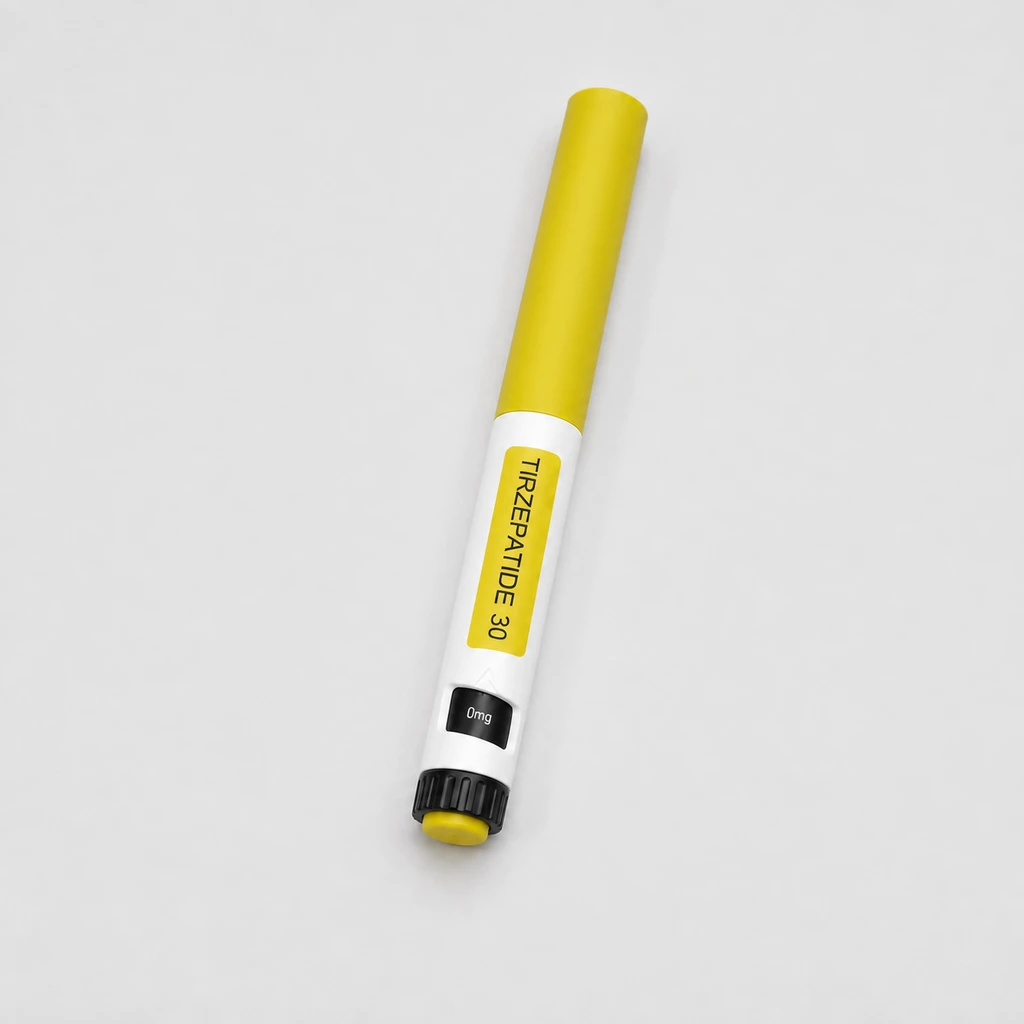
Our tirzepatide pen page lists the available formats and current catalogue price. The 30 mg and 60 mg amounts refer to the total labelled contents of the complete pen. They are purchase-format details that help you compare like-for-like offers.
When contacting the team, identify the exact presentation rather than sending only “tirzepatide.” That makes it easier to confirm which pack and variant you want to review. Keep the product's own information and the clinical plan you already have together when evaluating the offer.
For Canggu, Berawa or Pererenan accommodation, provide the villa or hotel name, a map pin if needed and a time when someone can receive the order. Availability and delivery arrangements can then be confirmed for that address. If you will move accommodation during the stay, make clear which address applies to the enquiry.
Tirzepatide's liver-fat evidence is valuable because it concerns an actual imaging measurement in a defined human study. Use that precision to understand the benefit being discussed, then use the catalogue's exact product details to organise a clearer, more informed Bali enquiry.