MOTS-C and Exercise: Muscle-Signalling Research in Focus
A Canggu guide to MOTS-C, exercise-induced signalling and the difference between human observations and mouse performance experiments.
Exercise changes more than the number on a treadmill. It also changes signals within muscle and between tissues. MOTS-C and exercise is an interesting research topic because this mitochondrial-derived peptide has been measured in connection with physical activity, providing a biological link between movement and metabolic communication.
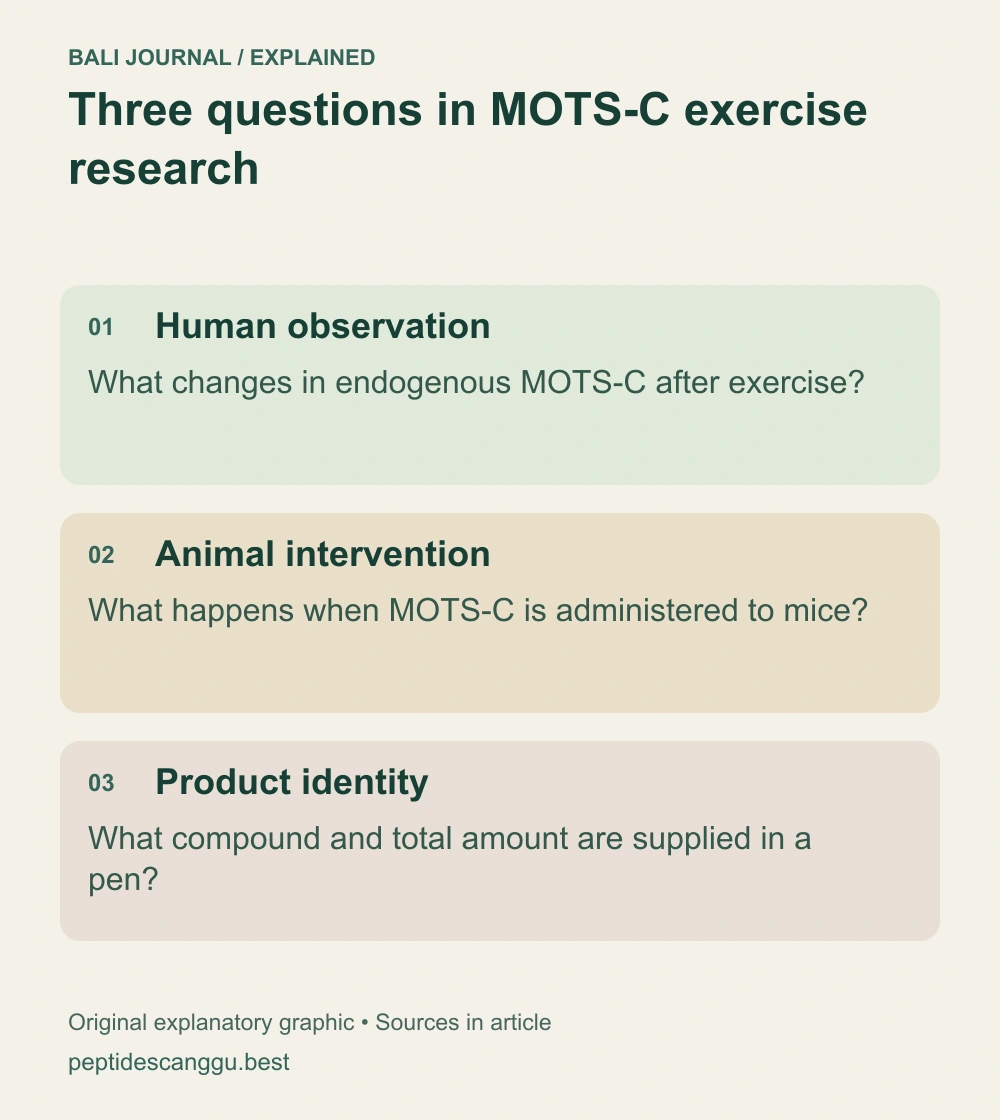
For an active audience in Canggu, Bali, Indonesia, the useful question is what those studies actually measured. Endogenous MOTS-C after exercise, injected MOTS-C in a mouse experiment and a supplied 32 mg pen are three different parts of the discussion. Keeping them distinct makes the science clearer and the product comparison more useful.
Why muscle signalling matters
Muscle adapts to the demands placed on it. Researchers study those adaptations using performance tests, tissue samples, blood measurements and molecular analyses. Each method sees a different layer of the response.
A blood concentration can show that a signal changed after exercise. It does not, on its own, tell you that the signal caused a training benefit. An experiment that administers a molecule and measures performance asks a different question again.
This is the key to reading MOTS-C research confidently. Identify whether the study observed a natural response or tested an intervention, then check whether its participants were people, animals or cells.
The human exercise observation
A 2021 primary study by Reynolds and colleagues reported exercise-induced endogenous MOTS-C expression in human skeletal muscle and circulation. In separate experiments within that work, administered MOTS-C improved physical performance in mice of different ages.
The human finding supports the idea that MOTS-C belongs in the exercise-signalling conversation. The mouse findings provide an intervention-based research direction. They do not demonstrate that a commercial pen improves endurance in a human gym user.
An especially useful feature of the study is the combination of tissue and whole-body questions. It connects a cellular signal with research into physical capacity, while leaving the exact translation to human product outcomes as a separate task.
Another human study adds nuance
In a 30-person acute exercise experiment, participants undertook endurance exercise, resistance exercise or a control condition. MOTS-C showed a trend to increase after endurance exercise. The clearer significant circulating response involved humanin, another mitochondrial-derived peptide.
This is a good example of why two related signals should not be merged. A strong result for humanin is not automatically a strong result for MOTS-C, and an acute observation is not a long-term training trial.
For the reader, the practical gain is a better understanding of the research landscape. MOTS-C is being investigated through several complementary approaches; each finding deserves its own name, measurement and level of confidence.
What “performance” can mean
Performance may refer to running duration, distance, strength, fatigue resistance or a particular laboratory task. A result from one test should not be stretched to cover all of them. The same applies to the distinction between short-term exercise responses and changes after weeks of training.
When an online headline promises “better recovery,” ask what recovery meant in the cited experiment. A molecular signal after a workout and a faster return to a personal training programme are not the same endpoint.
This approach is particularly relevant in Canggu, where people may combine resistance training, surfing and other activities. The activities share a physical context, but they do not make every experimental endpoint interchangeable. A clear article helps you recognise the specific question rather than supplying a universal performance claim.
The 32 mg pen is a product specification
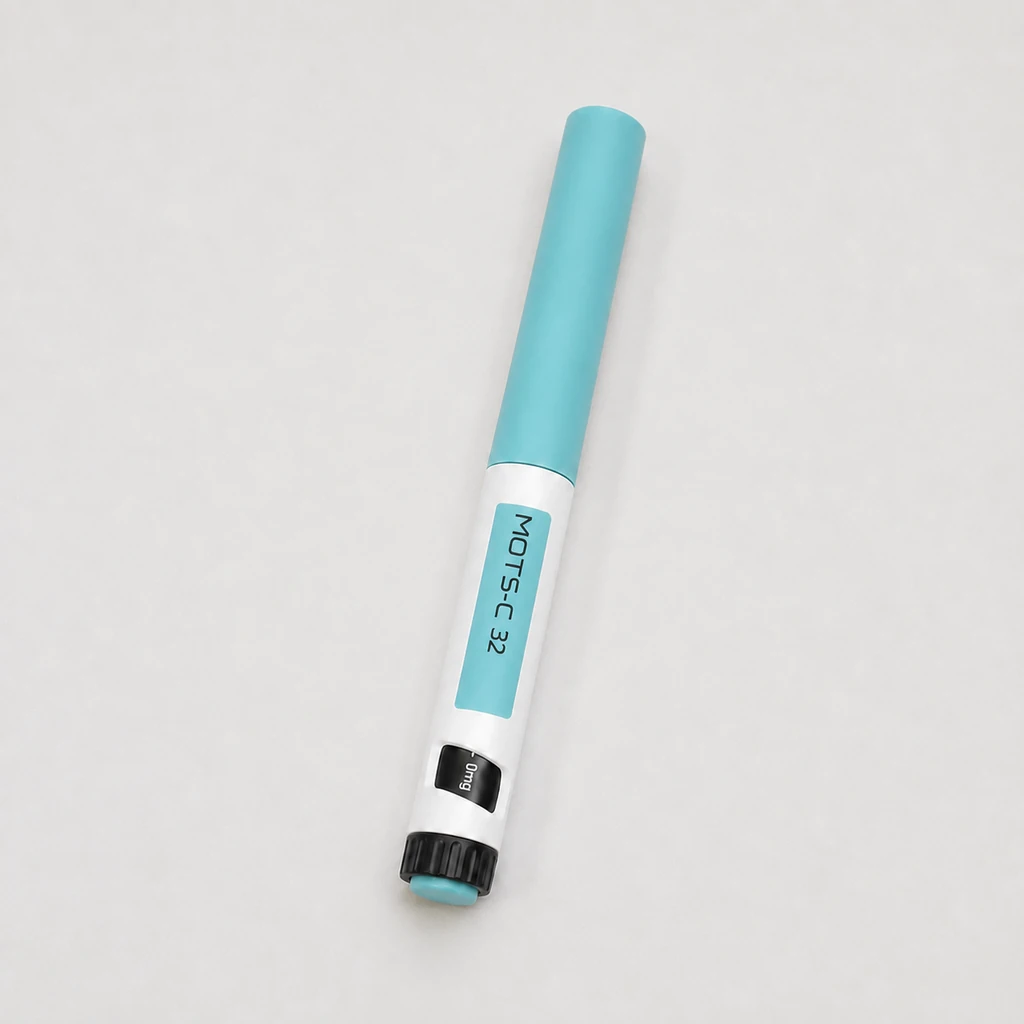
Our MOTS-C listing shows 32 mg total contents per prefilled pen at IDR 2,900,000. Those details let you compare a complete presentation, rather than an unnamed “energy peptide” or a price without a quantity.
The total quantity is not a personalised training protocol. It also does not show how much endogenous MOTS-C changed in an exercise experiment. Product contents and biological measurements use numbers for different purposes.
For a useful enquiry, keep the compound name, pen amount, quantity and any questions about the pack together. Ask for information that applies to the actual presentation, including the supplied product guide and relevant documentation.
Make the Canggu context practical
If you are staying in Berawa, Batu Bolong or Pererenan, provide the accommodation name and a clear address or map pin. If your day includes a gym session followed by a move to another part of Bali, specify where someone can actually receive the order. The team confirms availability and arrangements for the enquiry.
This is also a good place to separate a product question from a training or clinical decision. The catalogue can tell you what is offered; a clinician or qualified professional who knows your circumstances can address personal suitability and the reasons for a treatment decision.
MOTS-C's exercise connection is most interesting when it is explained precisely: a naturally responsive mitochondrial signal, human observational measurements and separate animal intervention work. Explore that evidence, then use the 32 mg product details to compare the actual Bali presentation.