Tesamorelin and Triglycerides: Beyond a Waistline Headline
A Bali guide to tesamorelin’s triglyceride and visceral-fat findings, why units matter and the 32 mg prefilled presentation.
The research interest in tesamorelin and triglycerides adds a metabolic dimension to a conversation often dominated by waistlines. Some trials assessed lipid measurements alongside visceral fat, allowing researchers to look at more than an appearance-related endpoint.
For readers in Canggu and elsewhere in Bali, Indonesia, this is a useful way to understand the compound's scientific profile. A blood-lipid value, an imaging measurement and a body-weight change describe different things. Tesamorelin research becomes more informative when those endpoints remain separate.
What triglycerides measure
Triglycerides are a type of fat measured in blood. A laboratory result is reported with a concentration unit, such as mg/dL. It is not a direct measurement of the amount of fat beneath the skin or around internal organs.
Visceral adipose tissue, by contrast, is an abdominal fat compartment that researchers can assess with imaging. A study can measure both outcomes, but the numbers cannot be substituted for one another.
This is the first step in reading a metabolic headline well: identify the material measured, the method and the unit. A fall in a blood concentration is not a fall in the same number of grams of body fat.
The 52-week tesamorelin findings
A trial and extension in adults with HIV-associated abdominal fat accumulation examined tesamorelin over an initial 26-week period and a further extension. Participants entering the later phase followed different continuation or switching sequences.
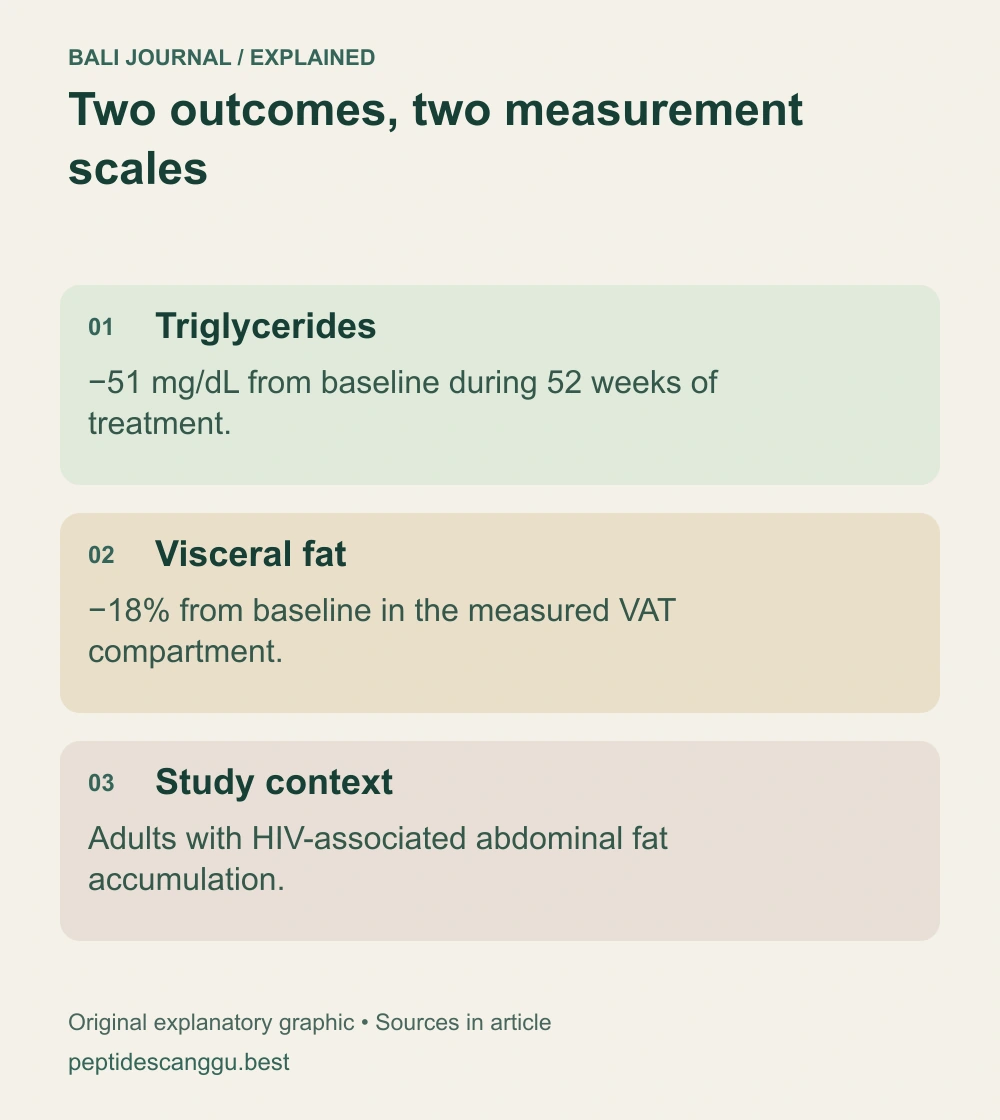
The publication reported sustained changes during 52 weeks of treatment, including a triglyceride reduction of 51 mg/dL from baseline and an 18% reduction in visceral adipose tissue. These are results in the defined study population and treatment setting.
The two figures should stay on different measurement scales. The triglyceride value is a blood concentration change; the VAT value is a percentage change in the measured fat compartment. The study does not turn them into one combined metabolic score.
Why the extension design matters
An extension follows participants after an earlier trial phase. The starting point for a reported change may be the original baseline or the beginning of the extension. That detail determines what the number describes.
In this publication, the 52-week values above were reported relative to baseline during continued treatment. They should not be described as placebo-adjusted 52-week effects unless the specific analysis supports that wording.
The study also reported reaccumulation of VAT after discontinuation. That observation belongs to the trial's longer-term pattern; it is not a personal instruction to start, stop or continue any product. Individual treatment decisions require the clinician responsible for the person's care.
A lipid marker is not a cardiovascular-event trial
An improvement in a measured risk-related marker can be scientifically interesting without proving that a treatment prevents heart attacks, strokes or another clinical event. Those outcomes require their own study design and follow-up.
This distinction makes the positive finding more credible. We can describe a quantified triglyceride change in a specified population without inventing a larger prevention claim. A precise statement is more useful than an impressive-sounding one that changes the endpoint.
For someone reading a blood report, a result also needs its own clinical context. The reference range, fasting status where relevant, other measurements and personal history affect interpretation. An article about a peptide cannot interpret an entire cardiovascular picture from one number.
How to organise a meaningful comparison
| Endpoint | Unit or method | Question it answers |
|---|---|---|
| Triglycerides | Blood concentration, such as mg/dL | What changed in this lipid measurement? |
| Visceral fat | Imaging-defined amount or percentage change | What changed in the internal abdominal-fat compartment? |
| Body weight | Kilograms or percentage from a defined baseline | What changed in total weight? |
| Clinical events | Event counts over follow-up | Were specified health events reduced? |
Keep the endpoint names visible when comparing tesamorelin with compounds whose major trials focus on body weight. A higher number from an unrelated measurement does not make one result stronger than another.
The 32 mg product in Bali
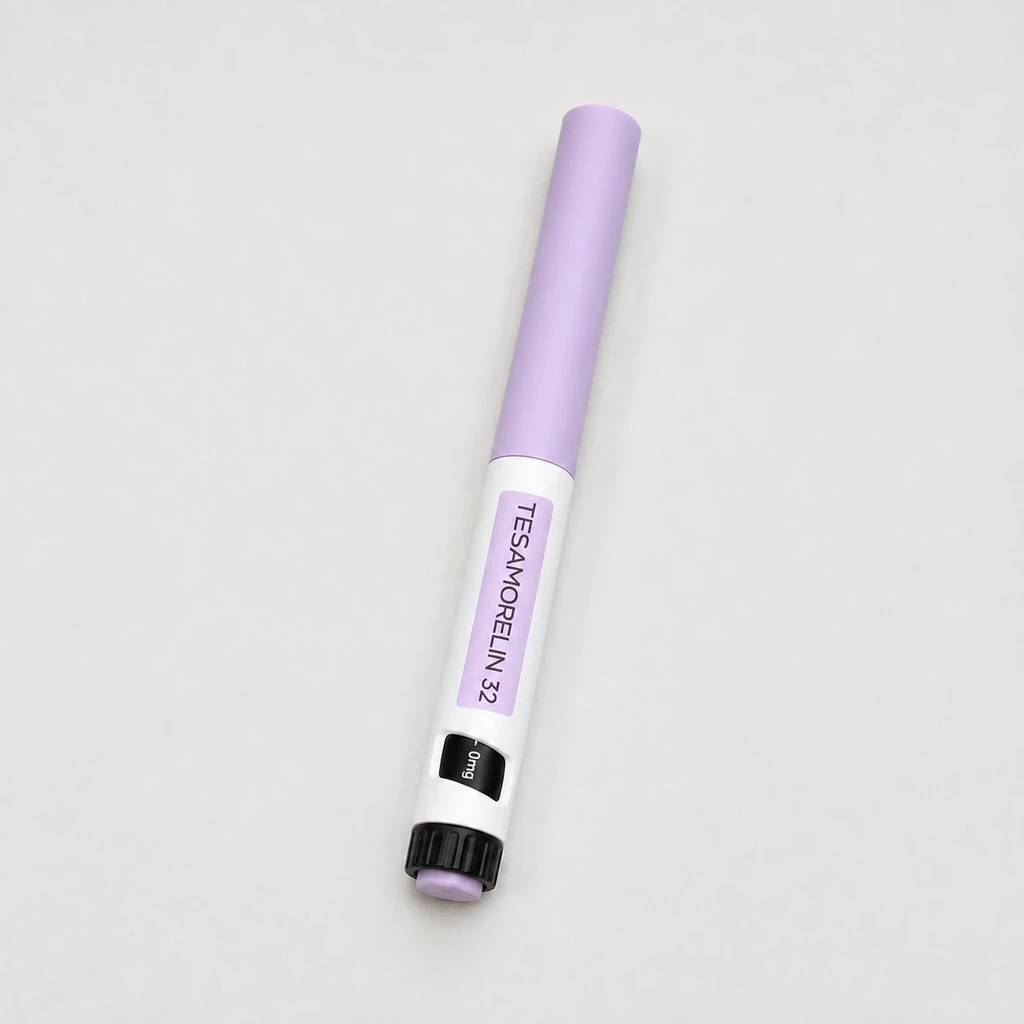
Our tesamorelin pen listing identifies 32 mg total contents per prefilled pen at IDR 2,900,000. The product format is a commercial specification, separate from the trial preparation and its clinical protocol.
Inspect the label and product photographs, review the supplied guide and ask for documentation relevant to the pack if required. A total pen amount does not translate directly into a predicted triglyceride change or a duration for a particular person.
For a receiving location in Canggu, Berawa or Pererenan, include your property name and complete address. If the enquiry concerns another part of Bali, name that area explicitly. The team confirms availability and the receiving arrangements for the actual request.
Tesamorelin's lipid research is worth understanding because it adds a measurable metabolic outcome to the visceral-fat story. Use the study population, baseline and units to read it accurately, then compare the actual 32 mg presentation for your Bali product enquiry.