What the tint on a Bali sunscreen can tell you about visible light
Tint, broad-spectrum labelling and SPF describe different information.
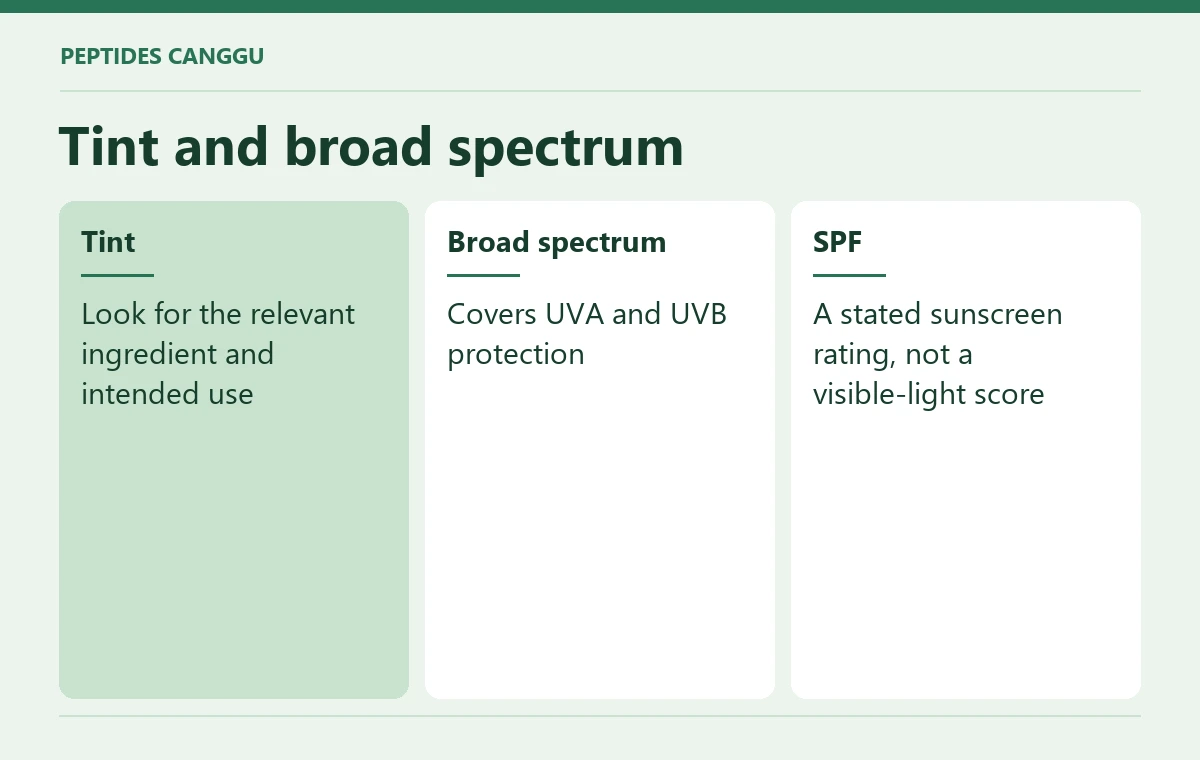
Tint, broad-spectrum labelling and SPF describe different information. For people troubled by dark marks, a dermatologist may discuss visible light as well as ultraviolet exposure. Colour on its own is not a standardised numerical protection rating.
Visible light and ultraviolet light
The AAD notes that tinted sunscreen containing iron oxide can help protect against visible light that may worsen dark spots, particularly in darker skin tones. Broad-spectrum sunscreen addresses UVA and UVB. These concepts should not be collapsed into one number. American Academy of Dermatology on dark spots and visible light American Academy of Dermatology sunscreen selection guide
The part of daylight visible to the eye differs from ultraviolet radiation. A sunscreen marked broad spectrum addresses UVA and UVB under the applicable labelling system. A tinted formulation containing iron oxide may additionally be relevant when visible light contributes to pigmentation. These facts do not make every coloured face product a tested sunscreen. Check what the product's protective claims actually describe and what use directions accompany them. A pigment appearing on an ingredient list identifies an ingredient; it does not supply a tested SPF or a personalised protection time.
A practical comparison in the pharmacy
A Canggu resident compares a tinted cosmetic serum and a sunscreen listing iron oxides. A similar shade does not show the products were tested for the same purpose. Read the sunscreen directions, active protection claims and ingredient information on each container.
If a tinted serum and a tinted sunscreen are both described as suitable for dark spots, read the back as well as the front of each. Does it identify the product as sunscreen? Does it carry a broad-spectrum claim and the application directions for that formulation? Is iron oxide included among the ingredients? A product may serve more than one purpose, but the answers need to come from its own label. Preserve the exact name and shade if a dermatologist is investigating a reaction, since photos of a similar-looking bottle might concern a different formula.
What the details change
The front of a tinted product may describe the shade and finish without saying anything about sun protection. Its intended use and complete labelling make a better starting comparison.
A shade labelled warm or neutral is a description of appearance. The separate claim about sunscreen protection determines whether there is information on which to base sunscreen use.
Take a photograph of both labels if a clinic is helping with persistent pigmentation. Ask which product provides the intended protection and how it fits with shade and clothing. A copper peptide label cannot supply an SPF value.