What does “mg NE” mean next to niacin in Bali?
Niacin equivalents express dietary vitamin B3 activity.
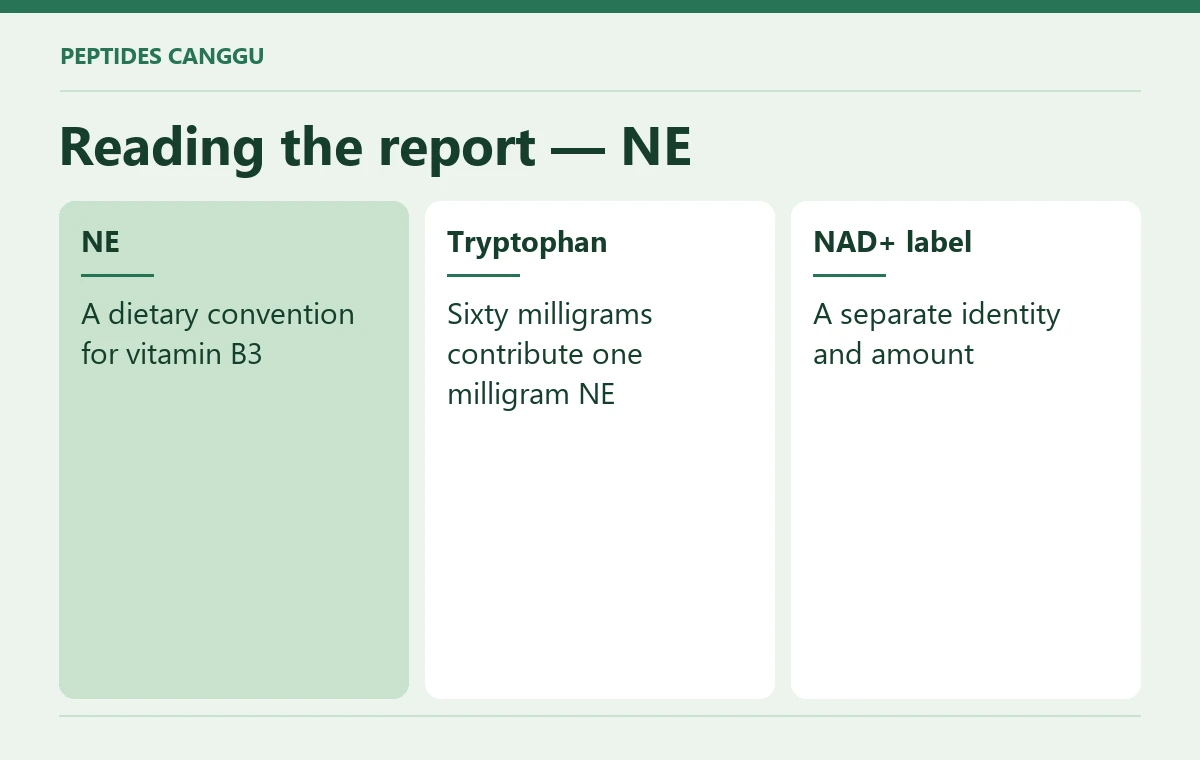
Niacin equivalents express dietary vitamin B3 activity. A milligram value printed on an NAD+ product describes the labelled substance in that particular pack. The two figures cannot be used as interchangeable units when you bring a supplement list to a Canggu appointment.
Read a food label as a serving
The NIH Office of Dietary Supplements explains that one milligram of niacin equivalents corresponds to one milligram of niacin or sixty milligrams of dietary tryptophan. The latter is a protein building block from which the body can make niacin. This convention supports nutrition assessment. It is not a conversion formula between product routes or a prediction of circulating NAD. NIH Office of Dietary Supplements on niacin
A label can present a value for one serving and a different value for the whole package. First determine how much was actually eaten and whether the label states milligrams or a percentage of a reference intake. A percentage without its reference cannot simply be added to a milligram value from another packet. Protein adds a further complication. Dietary tryptophan contributes to the convention used to estimate vitamin activity, yet a food label does not necessarily state how much tryptophan a portion contains. A dietitian can interpret a food record with that context. There is no need to invent an unlisted quantity to make the record look complete.
Trace an unfamiliar number back to its container
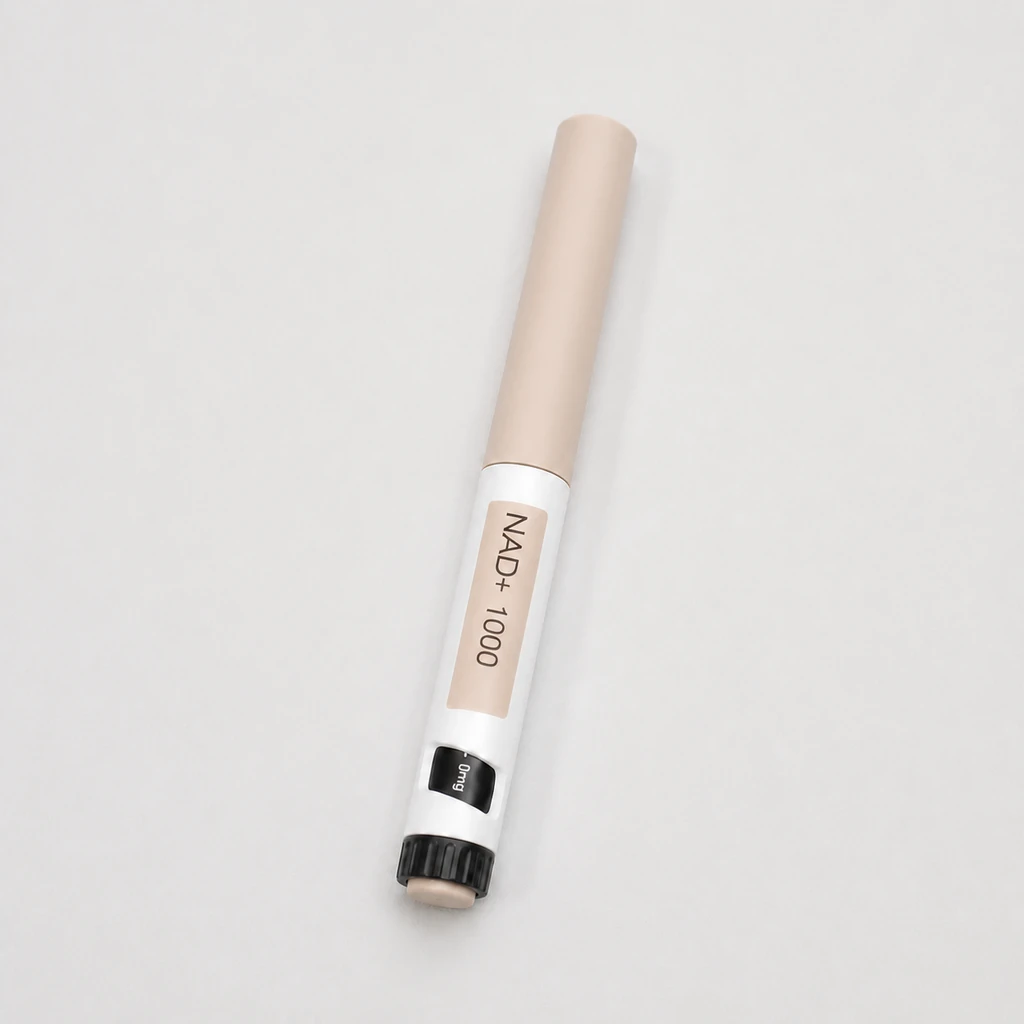
Picture breakfast cereal labelled in milligrams NE and a separate catalogue photograph marked NAD+ in milligrams. In a food diary the cereal entry belongs with portions actually eaten. In the products list keep the exact NAD name, route and packaging wording. Adding their two printed quantities would produce an impressive but meaningless total.
A photograph sent from a shop often crops out the line identifying a serving as one capsule, one scoop or an entire package. Save the uncropped information first. When the advertised product names NAD, NADH, nicotinamide or nicotinic acid, copy those words exactly instead of shortening them all to “B3.” The appointment can then address a narrower, answerable question. A clinician assessing dietary adequacy may want the amounts actually consumed across meals. A clinician investigating a possible reaction may care more about the named ingredient, route and timing. A high numeral printed on a different product establishes neither a dietary deficiency nor a reason to substitute it for food.
How to use the finding
When a clinician asks about vitamin intake, separate food portions from supplements and list the named form of each. If your question is about a symptom, the time course and other current products are more useful than a total assembled from unlike labels.