T-score or Z-score? Reading the right line of a DXA report in Bali
Two negative numbers on a DXA report can compare a person with two different reference populations.
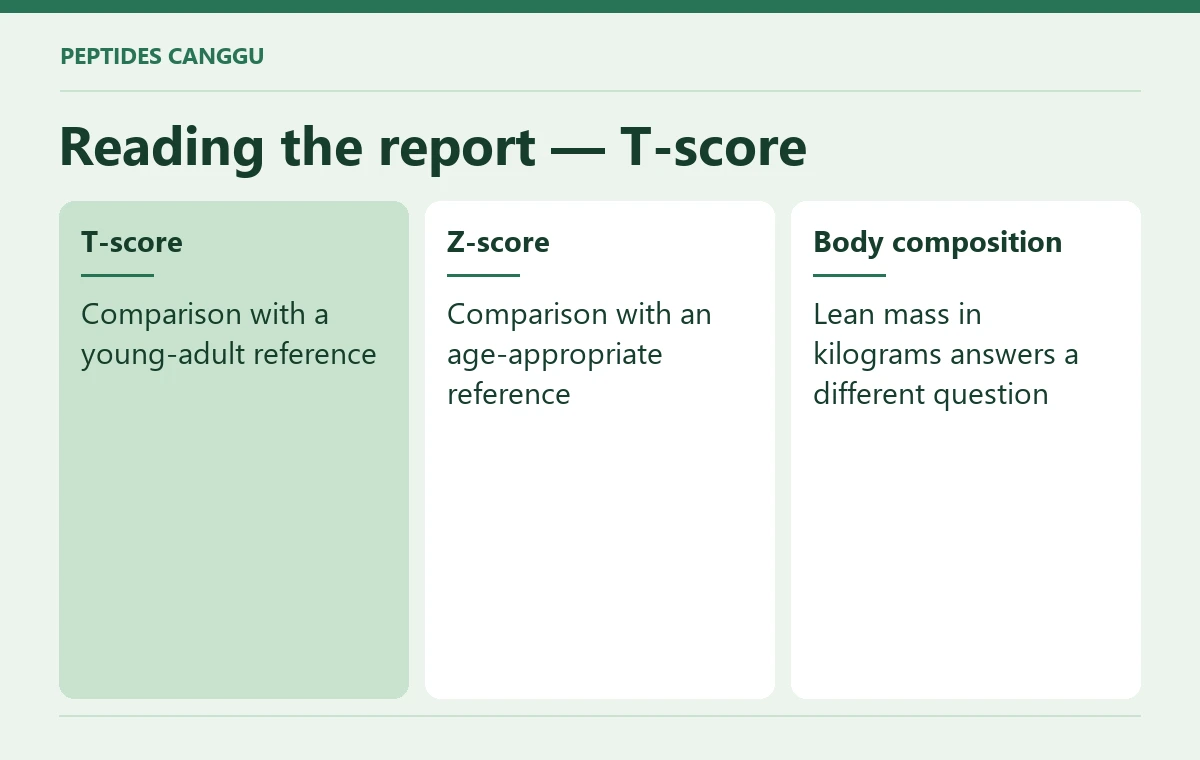
Two negative numbers on a DXA report can compare a person with two different reference populations. Before asking which number is worse, identify the comparison appropriate for the person's age and menopausal status and the part of the skeleton scanned.
Read the reference group before the minus sign
The ISCD adult positions generally prefer Z-scores for females before menopause and males under fifty. For these groups a Z-score of minus two or lower is described as below the expected range for age. For postmenopausal women and men aged fifty or older, T-scores are preferred. A bone density report alone cannot diagnose osteoporosis in a man under fifty. ISCD official adult DXA positions
Think of the score as a location within a reference distribution. Zero is the average of that reference population, and the distance from zero is expressed in standard deviations. A value of minus one does not mean a one-percent deficit in bone density. Nor does a change in the sign of a score give a percentage change in fracture risk. The report may also list an actual bone mineral density value with its own unit. Write the density, the score and the reference population on separate lines. That simple distinction prevents a number copied from a summary page from acquiring a different meaning when it reaches a second clinic.
Why two valid reports may still resist comparison
A forty-year-old Canggu resident reviewing bone density alongside a body-composition scan may see a hip Z-score, a spine T-score and total lean mass in kilograms. Put the anatomical site beside the first two values and put lean mass on a separate line. It measures a different property and cannot substitute for bone density.
A follow-up examination sometimes includes a different hip, a different spinal region or a comment excluding a vertebra from interpretation. Read that portion of the report before highlighting the change in a printed score. Scans taken at two facilities also need to be interpreted with attention to the instrument and the service's comparison procedures. A small apparent difference can sit within measurement variability. For a Canggu patient assembling records from two countries, carrying the original report with its anatomical sites and the previous images, if available, gives the interpreter more to work with than a translated message containing only two negative numbers. Ask which comparison is technically supportable.
What to keep with the result
Ask the interpreter which row belongs in the clinical conclusion and whether past scans were taken at comparable sites. Discuss individual risk factors separately before drawing conclusions about hormones or deciding on further testing.