When creatinine and cystatin C disagree on a Bali lab report
Different eGFR numbers on the same laboratory report can come from different equations.
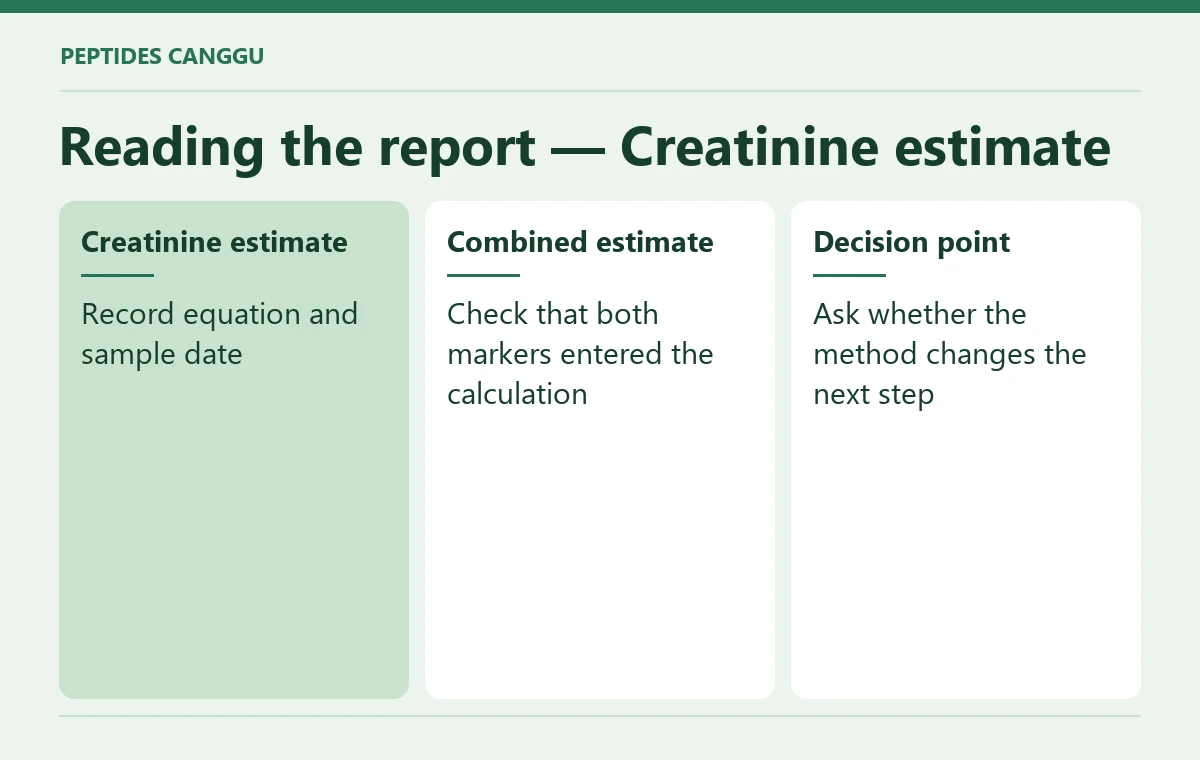
Different eGFR numbers on the same laboratory report can come from different equations. Before comparing them, find out which marker each equation uses. A change in body composition is one reason to ask whether creatinine alone tells the whole story.
Find the equation behind the number
NIDDK describes a creatinine-only equation, a cystatin-C equation and a combined adult equation. The combined estimate is generally more accurate and is particularly useful when an estimate sits near an important clinical decision threshold. Each remains an estimate of filtration. Cystatin C also has influences outside kidney filtration. NIDDK adult eGFR equations
The letter e is worth retaining when copying the result. A measured filtration rate and an estimated one are obtained in different ways. On an adult laboratory report, a printed eGFR may appear downstream of a perfectly ordinary creatinine result, with the equation tucked into a footnote. A second report may place three estimates side by side. Copying the biggest number from one report and the first number from another creates a sequence that neither laboratory actually produced. A more informative comparison has one column per equation and one row per date. Leave a cell empty when the laboratory did not report the marker needed to calculate it.
Read the numbers in the context of the question
Suppose one Canggu clinic printed a creatinine-based eGFR in June and another printed the combined value in November. Drawing a line between the two without marking that change treats a difference in method as elapsed kidney decline. Retrieve the underlying marker results, dates, units and equation names from both laboratories.
For a person whose weight has changed, it is tempting to attach every change on the same page to that one event. Instead, separate the observations. The scale records total body weight, while a change in muscle may affect the interpretation of creatinine. The laboratory's equation estimates filtration from available markers and demographic inputs. None of those observations by itself identifies which component of body weight changed or which process accounts for the difference between two reports. Someone close to a treatment or referral threshold may need a different level of precision than someone comparing two routine review letters. Bring the complete pages so the clinician can see both the raw results and the wording of the laboratory comment.
The question worth bringing back
At the appointment, ask which previous observation offers the fairest comparison and whether a repeat with a consistent method would change a decision. A catalogue entry or a recent change in weight cannot identify the cause of a laboratory difference.