Two vitamin D tests with similar names in Bali
The usual blood test for vitamin D status measures 25-hydroxyvitamin D.
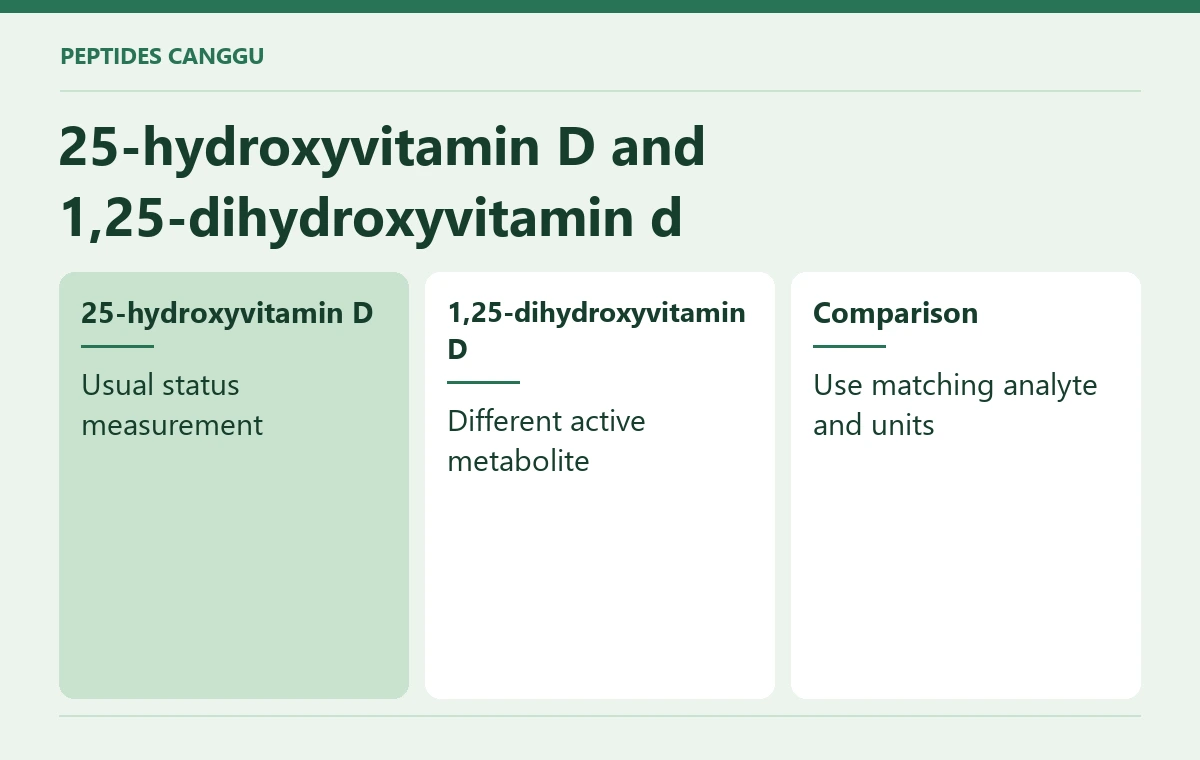
The usual blood test for vitamin D status measures 25-hydroxyvitamin D. A result for 1,25-dihydroxyvitamin D measures a different form and can be ordered for different clinical questions.
The numbers inside a chemical name
MedlinePlus identifies 25-hydroxyvitamin D as the most accurate way to assess how much vitamin D is available in the body. The kidney converts vitamin D into its active form, and clinicians may use other tests for selected conditions. MedlinePlus on vitamin D testing
The short forms 25(OH)D and 1,25(OH)₂D refer to different molecules. Those numbers belong to the chemical names, not simply to different labels for a standard vitamin panel. Measuring one molecule is no more a repeat of the other than measuring two different hormones with similar names. Before making a graph, write out the analyte in full at least once and retain the original report. If a digital portal truncates either name, use the laboratory's downloadable result to identify the test.
A different investigation can be intentional
A Canggu resident files both reports under vitamin D and reads their numbers as a trend. Check the full chemical name and units first. Even a correctly converted unit cannot turn one metabolite into a measurement of the other.
An unexpected test name on a referral is not necessarily a clerical mistake. A clinician might be investigating vitamin status in one setting and an aspect of mineral metabolism in another. A patient who moved to Bali may have reports from both settings and no easy memory of why a particular test was requested. An old referral letter or report comment can resolve that uncertainty. If it cannot, the receiving clinician can still decide what the existing sample can support and which measurement, if any, is needed. A claim about sun exposure is not a substitute for identifying the molecule actually measured.
The question for the next appointment
Look in the laboratory comments for the full name of the analyte. A personal record that abbreviates both tests as “D” can make an apparent rise or fall impossible to interpret a year later. If the result was ordered for a specific mineral or kidney investigation, keep the referral note with it. That context can explain why a clinician requested a less familiar metabolite even if another vitamin D result was already available.
A named test performed abroad can still be relevant on arrival in Bali. The question is whether its analyte, unit and purpose match what the new clinician needs.
Ask which form the earlier clinician intended to monitor and copy the relevant reference range. Time outdoors and a supplement's front-label amount cannot replace a measured blood result.