Borderline B12 and a methylmalonic acid result in Canggu
Methylmalonic acid can help investigate a possible vitamin B12 deficiency, especially when an initial result leaves uncertainty.
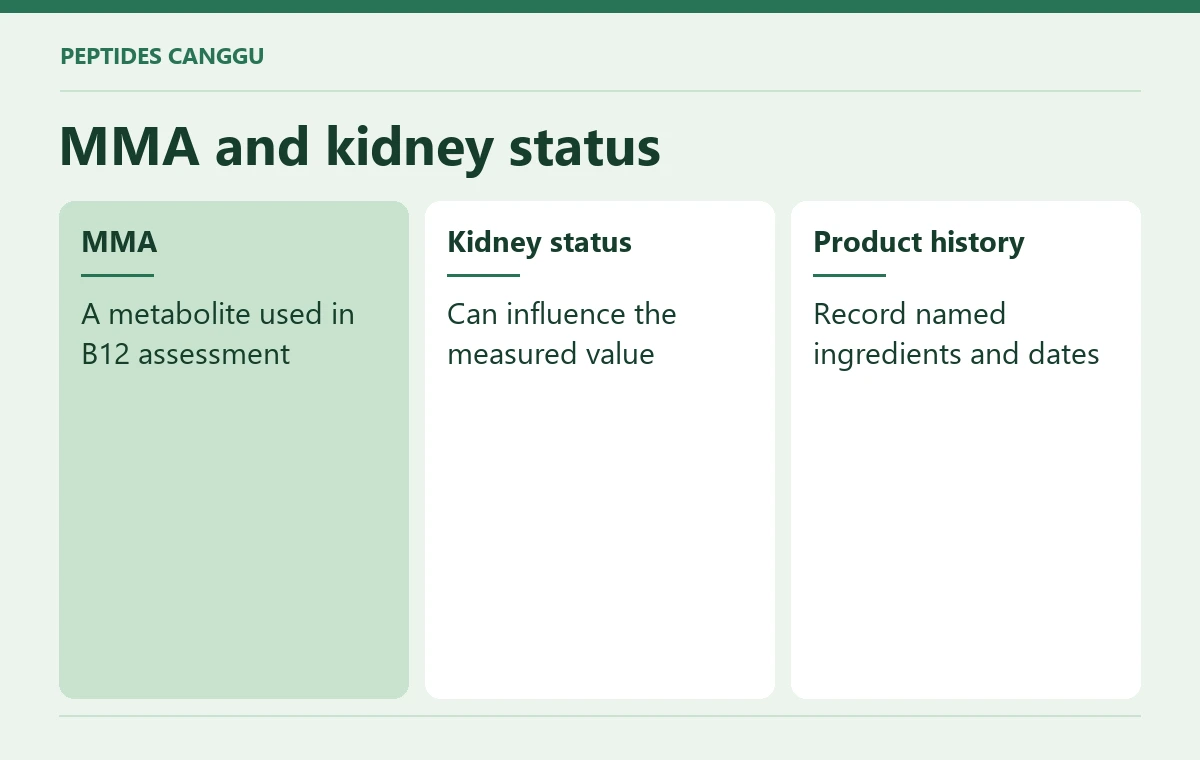
Methylmalonic acid can help investigate a possible vitamin B12 deficiency, especially when an initial result leaves uncertainty. Kidney function also affects interpretation; an elevated MMA is not a standalone measure of dietary intake.
A marker of a pathway
MedlinePlus explains why MMA may rise when B12 is insufficient and why clinicians can request it alongside other information. Reduced kidney function is one possible explanation for elevation apart from low vitamin B12. MedlinePlus on methylmalonic acid NIDDK adult eGFR equations
Vitamin B12 is involved in biochemical processes that influence MMA. The concentration is therefore used as an indirect clue, particularly when a serum B12 result alone leaves doubt. The word indirect matters. A raised concentration does not tell a clinician exactly how much B12 a person ate, when absorption changed or whether a particular supplement caused symptoms. Kidney function can affect the result as well. A clinician weighing these explanations needs the time relationship between the MMA sample, other blood tests and any treatment already begun.
Avoid reconstructing a pre-treatment baseline
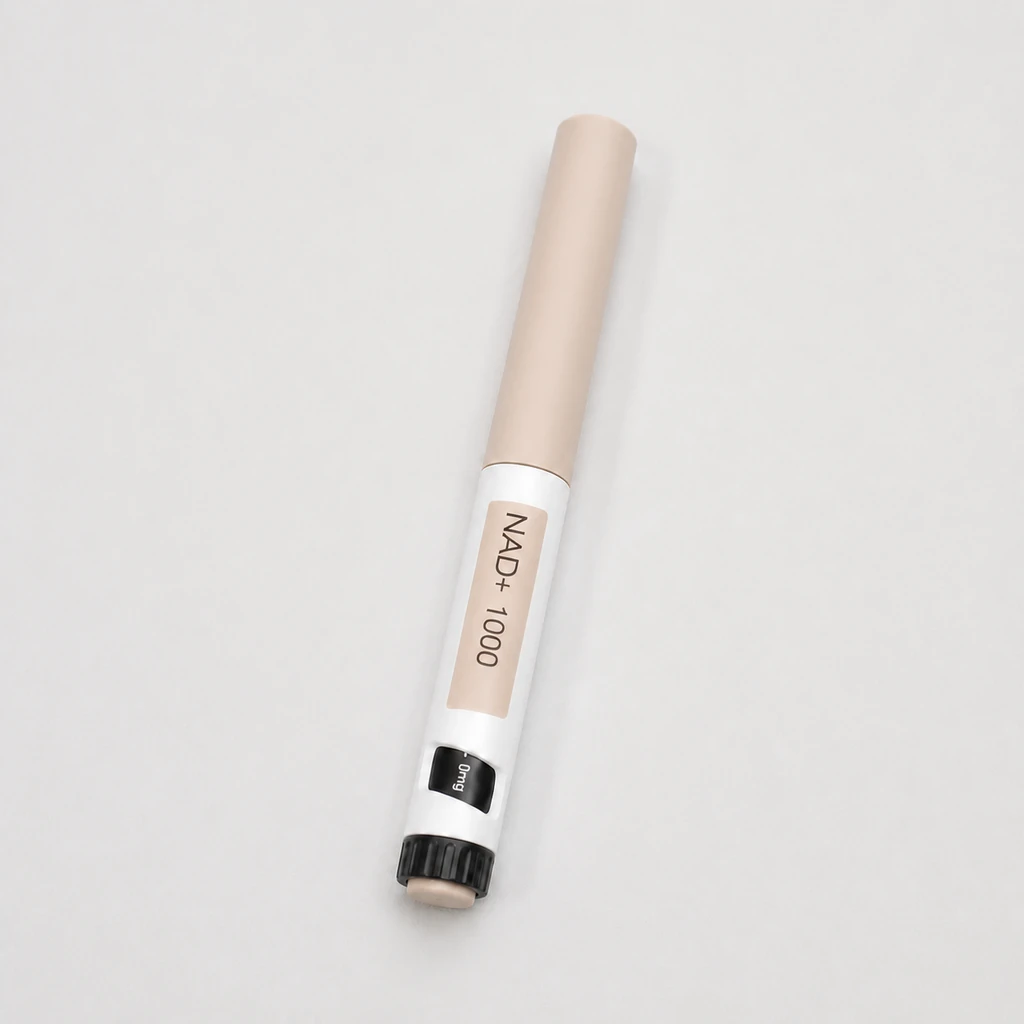
A Canggu resident brings a laboratory result headed MMA and a supplement advertised as cellular energy support. The marketing term gives no information about B12 content. Record actual ingredients and any earlier supplementation alongside blood collection dates.
Imagine someone begins taking a supplement before an appointment and then obtains an MMA measurement. The result describes the situation around that later sample, not a measurement taken before the first capsule. The packet may also include several vitamins, so a report of “more energy after B vitamins” does not isolate any one ingredient. Record the date the product was started, its listed contents and the reason for taking it. If a clinician requested a follow-up, ask which marker and interval were intended. A before-and-after claim is far easier to evaluate when both observations actually exist.
Which comparison belongs in your notes?
A value above the reference interval does not distinguish every reason MMA may be elevated. A clinician can ask whether recent kidney results, blood-count findings and the history of supplementation jointly support a particular explanation. A nutritional history without those details or a metabolite result without symptoms answers only part of the question.
A clinician can decide whether two measurements are close enough in time for the particular investigation. If the kidney result was obtained during a different illness, disclose that fact rather than assuming it describes kidney function throughout both periods.
Ask what question the MMA measurement was intended to resolve and whether the relevant kidney results were available. Avoid interpreting a vitamin label as proof of an adequate or deficient tissue level.