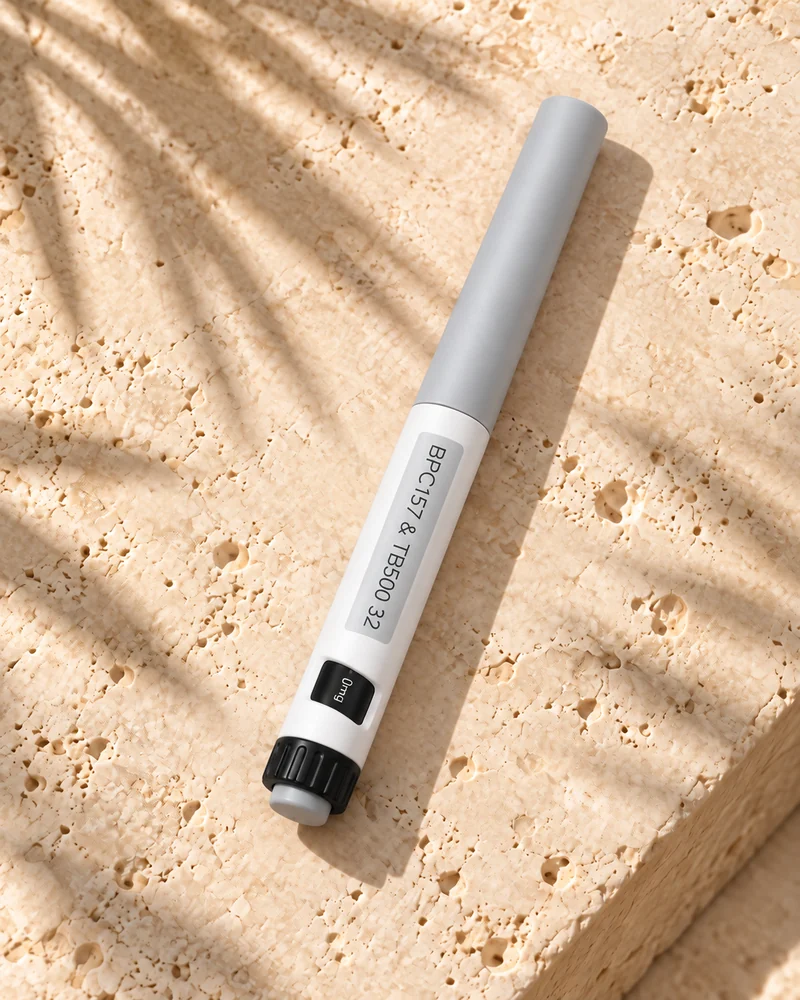

BPC-157 and GHK-Cu are different peptides associated with different research questions. BPC-157 often appears in tissue-repair discussions; GHK-Cu is a copper-binding peptide studied in skin and extracellular-matrix biology. Neither the word “repair” nor a shared reference to collagen makes them interchangeable. A Bali comparison also needs to account for the actual listed product: BPC-157 is offered here with TB-500.
Compare the molecule before the marketing category
| Question | BPC-157 | GHK-Cu |
|---|---|---|
| Research examples | Tendon-cell responses and other tissue models | Copper-peptide effects on fibroblasts and matrix biology |
| What a mechanism does not establish | A defined human injury-recovery result | A defined clinical skin result from an injected product |
| Actual catalogue presentation | BPC-157/TB-500 blend | GHK-Cu pen |
| Labelled contents | 16 mg of each component | 50 mg GHK-Cu |
The table separates the research ingredient from the purchasable presentation. It is not a ranking of clinical effectiveness and does not compare administration amounts. “Which is stronger?” has no useful answer until the desired outcome and exact product are defined.
What the two laboratory studies actually address
A BPC-157 experiment examined growth-hormone-receptor expression in tendon fibroblasts. A GHK-Cu experiment examined collagen synthesis in fibroblast cultures. These studies help explain why the compounds appear in related discussions, but they are not a head-to-head trial of injury recovery or skin appearance in people.
The measured endpoint is the important part. A cell response, a clinical symptom, a photograph and the ability to resume an activity are different outcomes. Substituting one for another can turn a limited scientific observation into a claim the experiment never tested.
The term “collagen peptide” can add another layer of confusion. A product discussed in collagen-related research is not thereby the same thing as a dietary collagen product. This article concerns the specific molecules and catalogue pens named above, not a generic supplement category.
The copper distinction is real, but not a result guarantee
GHK-Cu refers to GHK associated with copper. Our GHK-versus-GHK-Cu guide explains that identity question. A copper-related mechanism does not tell you that a particular skin concern will respond, or that one route of administration can borrow evidence from another.
For example, a claim about a cosmetic formulation does not validate the same claim for a pen. The formulation and route belong to the study question, not just the small print. This matters when a skin-care page is used as evidence for a different product format.
BPC-157 alone is not the BPC/TB listing
Our BPC-157/TB-500 page describes two ingredients in one pen. The presence of BPC-157 does not make every study of BPC-157 a study of that blend. TB-500 adds another identity and evidence question; it does not automatically prove a better result.
The GHK-Cu page is a separate listing. FDA's information on selected substances records important uncertainties for BPC-157 and injectable GHK-Cu. Similar catalogue positioning does not erase those differences or establish their combined use.
Make your Canggu comparison specific
Write the concern in ordinary language before choosing a category: a diagnosed tendon issue, a skin-texture question or a claim you want to verify. Then identify the evidence needed to answer it. A skin photograph cannot resolve tendon function, and a tendon-cell paper cannot predict the appearance of a scar.
For a catalogue enquiry, specify the actual pen, not just “the recovery one”. For a clinical question, bring the diagnosis or symptom description and any current treatment to the relevant professional. This keeps a useful product comparison from becoming an unsupported self-treatment decision.
Questions readers ask
Does GHK-Cu replace BPC-157 for recovery?
No substitution follows from the research described here. “Recovery” is too broad; the injury, endpoint, formulation and evidence must match.
Does a skin-related mechanism mean a pen gives cosmetic results?
Not by itself. The relevant outcome must be demonstrated for the relevant route and product, rather than borrowed from another formulation.
Can a bundle settle the choice between them?
A bundle changes which items are offered together. It does not answer which evidence fits your question or establish that both are appropriate.
Sources and further reading
- Pentadecapeptide BPC 157 enhances the growth hormone receptor expression in tendon fibroblasts
- Stimulation of collagen synthesis in fibroblast cultures by the tripeptide-copper complex glycyl-L-histidyl-L-lysine-Cu2+
- Certain Bulk Drug Substances for Use in Compounding that May Present Significant Safety Risks
Prepared with AI assistance and checked against the linked sources. No licensed medical review is claimed.