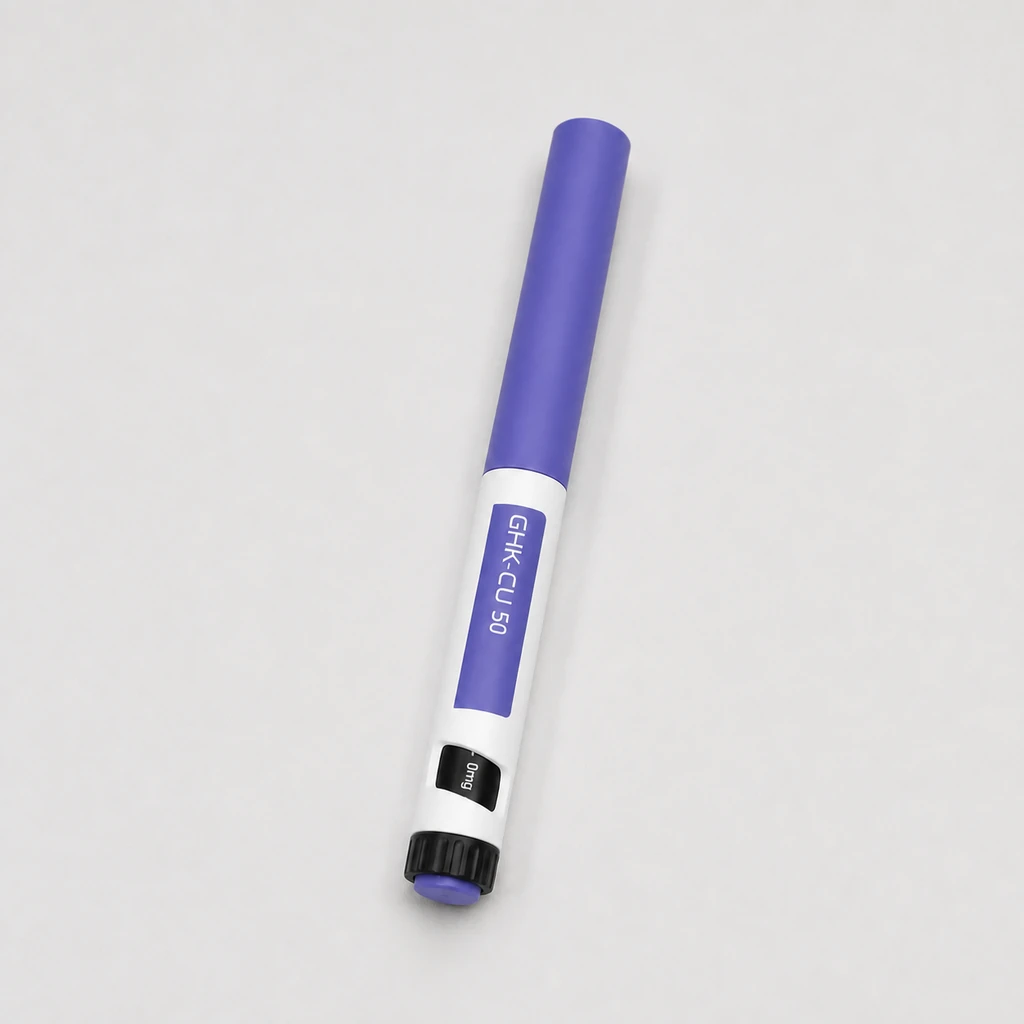
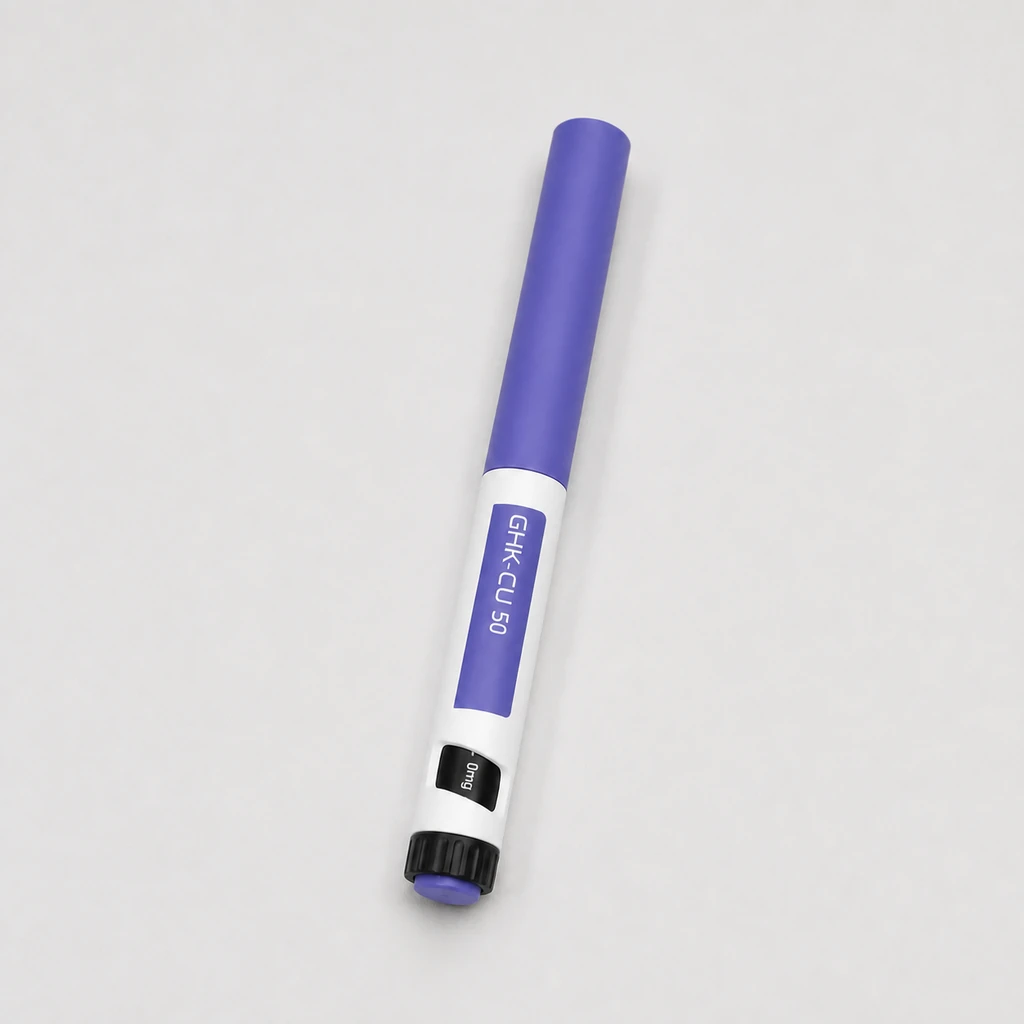
GHK is the peptide glycyl-histidyl-lysine. GHK-Cu is its complex with copper. The Cu suffix adds a chemical partner to the name, so the comparison concerns the free peptide and a metal–peptide complex rather than two lengths of the same chain. When comparing GHK-Cu products in Bali, Indonesia, distinguish a topical cosmetic from a pen before applying findings about skin or hair.
How copper fits into the structure
GHK contains three amino-acid units: glycine, histidine and lysine. Chemical groups on the peptide can coordinate copper ions. “Coordinate” means that atoms on the peptide participate in binding the metal into a complex.
A detailed solution-chemistry study examined GHK and related peptides using several analytical techniques. It found copper complexes with properties dependent on the chemical conditions, including pH. The primary study helps explain why the surrounding formulation matters to this interaction.
Why the complex interests skin researchers
An early cell experiment found increased collagen synthesis when cultured fibroblasts were exposed to GHK-Cu. The original report is part of the biological background behind copper-peptide skincare.
The experiment examined the complex in cells. It supplies a reason to investigate formulations, while visible changes in skin require measurements with the finished topical product. A comparison of the free peptide and copper complex is therefore a chemical starting point, not a clinical ranking of every serum.
What the names mean in a routine
GHK-Cu often appears in discussions of copper peptides. A product description may instead use a cosmetic ingredient name, such as Copper Tripeptide-1, as defined in the cosmetic ingredient assessment. Alongside the peptide, a serum or cream has a base that determines texture, moisturising feel and how it fits with the rest of a routine.
The catalog's GHK-Cu pen is a different presentation from a topical skincare formula. Keeping the route explicit makes both the chemistry and the product description easier to understand.
GHK-Cu and Copper Tripeptide-1 covers the naming connection. Copper versus signal peptides explains why skincare categories can overlap.
Identify the skin product before ordering in Bali
Start with the route of use. A cosmetic ingredient list describes a topical formula; a pen has a different presentation and documentation. Check which product and route were actually studied before using a skin or hair headline to compare offers. For a cosmetic routine, introduce changes in a way that lets you tell which product you used; keep photographs under similar lighting.
Product formats to compare in Bali
Compare the following catalogue entries with the product or route discussed above. The stated amount is the total labelled pack content, not a dose or a promise of how long it will last.
| Catalogue product | Labelled contents | What to distinguish |
|---|---|---|
| GHK-Cu | 50 mg / pen | Pen presentation; cosmetic-serum evidence belongs to its tested formulation. |
Confirm your Bali order
For Canggu, Berawa, Pererenan, Umalas, Seminyak or Uluwatu, send the exact product, quantity and destination. Ask the team to confirm the delivery arrangements for that address before relying on a proposed time.
View all pen formats · Ask about the exact product on WhatsApp
Sources and further reading
- Copper complexes of glycyl-histidyl-lysine and two of its synthetic analogues: chemical behaviour and biological activity
- Stimulation of collagen synthesis in fibroblast cultures by the tripeptide-copper complex glycyl-L-histidyl-L-lysine-Cu2+
- CIR: Safety Assessment of Tripeptide-1, Hexapeptide-12, Their Metal Salts and Fatty Acyl Derivatives, and Palmitoyl Tetrapeptide-7
Prepared with AI assistance and checked against the linked sources. No licensed medical review is claimed.