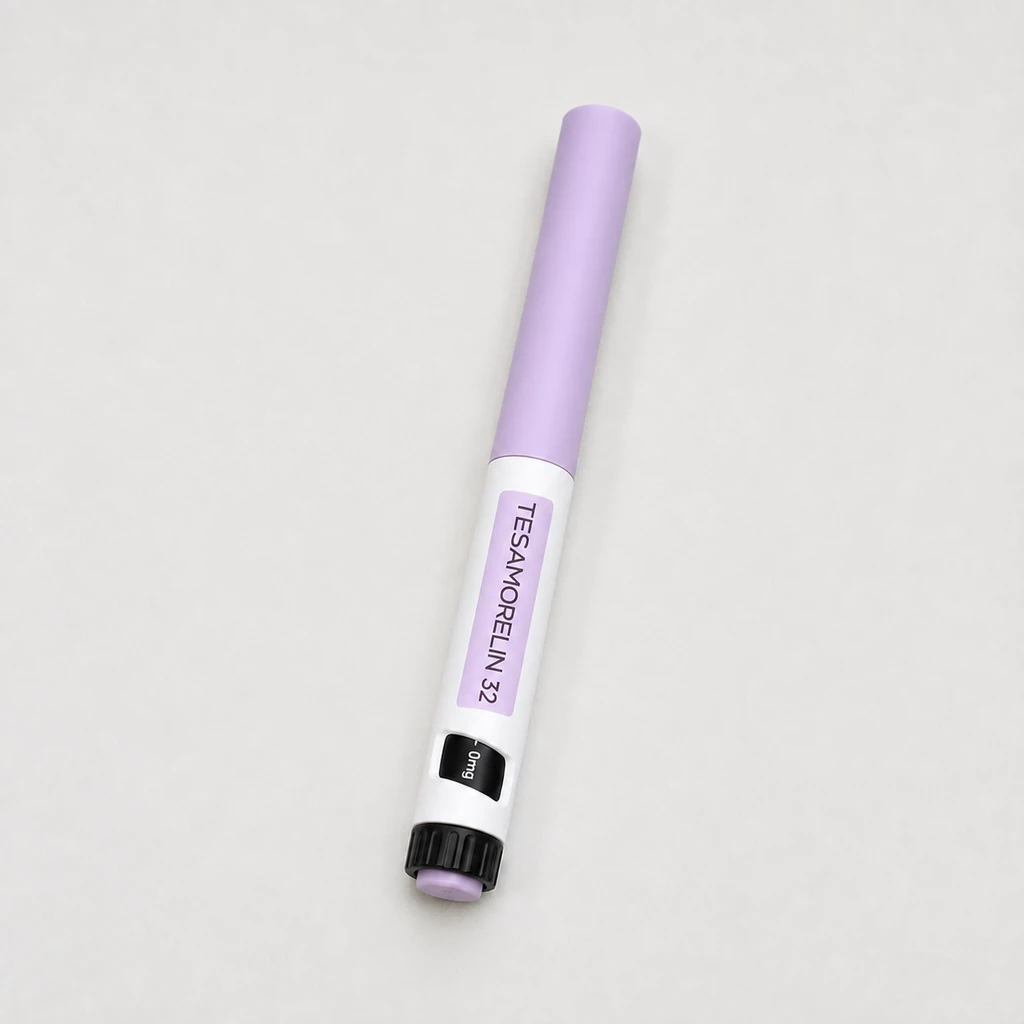
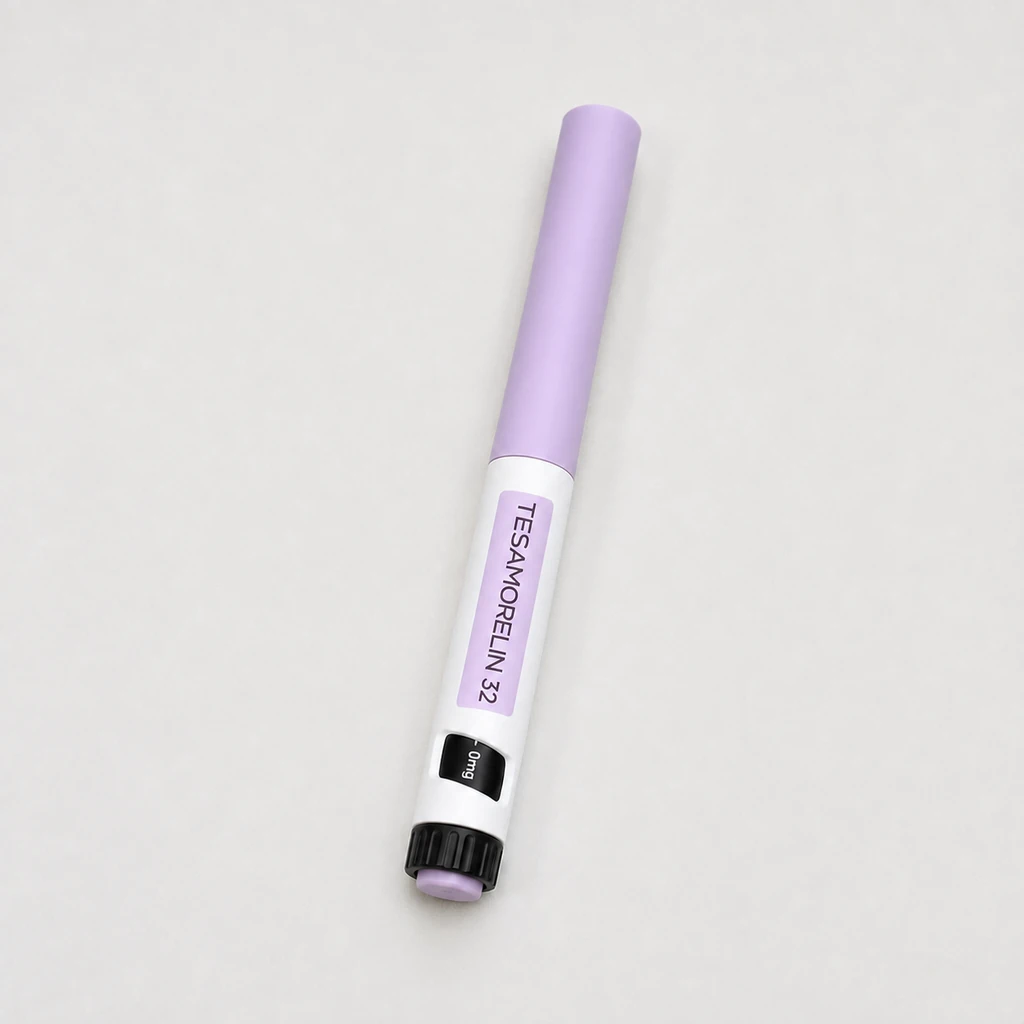
Tesamorelin is a peptide that stimulates the body's growth-hormone pathway. Its clinical results concern a particular abdominal fat compartment. The most useful way to understand its result is to distinguish fat deep inside the abdomen from fat beneath the skin and from overall body weight. For readers comparing Tesamorelin in Bali, Indonesia, separate evidence about a molecule from the identity and instructions of the finished product.
How Tesamorelin acts
Tesamorelin is an analogue of growth hormone-releasing hormone, often abbreviated GHRH or called growth hormone-releasing factor. It acts at the pituitary to stimulate growth-hormone release, which also increases IGF-1. It is a releasing signal rather than growth hormone itself. The EGRIFTA WR prescribing information describes this mechanism.
That pathway helps explain why Tesamorelin is discussed alongside body composition. The useful clinical question is what changed in a particular tissue, rather than whether a hormone measurement rose.
The measured visceral-fat result
In a randomized trial of 412 adults with HIV and abdominal fat accumulation, subcutaneous trial Tesamorelin reduced CT-measured visceral adipose tissue by 15.2% at 26 weeks; the placebo group showed a 5.0% increase. These figures describe the measured visceral-fat compartment, not the percentage of body weight lost.
The trial gives a concrete reason for interest in this molecule: the change was measured by imaging and compared with placebo. It also defines the clinical setting in which that particular result was obtained.
What that fat compartment means
Visceral fat lies within the abdomen around internal organs; subcutaneous fat lies beneath the skin. The trial report found a more specific effect on the visceral compartment. This is why its percentage should stay attached to that tissue rather than overall weight. Other body-composition studies measure different combinations of fat and lean tissue.
Put the molecule in its product context
EGRIFTA WR is a specific prescription formulation with a defined indication; a separately supplied catalog pen is a different finished product. The shared Tesamorelin name identifies the molecule, but product-specific evidence and documentation are needed to connect a pen with the clinical result. Total pen content alone does not provide that connection or an individual regimen.
The finished-product guide explains the formulation and device details behind that distinction.
Connect the evidence to a product question in Bali
Read the study’s formulation, route, participants and measured outcome before applying a headline to a product choice. A mechanism explains a research question; it does not establish a result for every finished pen. Keep the exact catalogue presentation beside the evidence, and identify any missing product-specific information before deciding what to ask next.
Product formats to compare in Bali
Compare the following catalogue entries with the product or route discussed above. The stated amount is the total labelled pack content, not a dose or a promise of how long it will last.
| Catalogue product | Labelled contents | What to distinguish |
|---|---|---|
| Tesamorelin | 32 mg / pen | Compare the exact product rather than assuming equivalence to EGRIFTA. |
Confirm your Bali order
For Canggu, Berawa, Pererenan, Umalas, Seminyak or Uluwatu, send the exact product, quantity and destination. Ask the team to confirm the delivery arrangements for that address before relying on a proposed time.
View all pen formats · Ask about the exact product on WhatsApp
Sources and further reading
Prepared with AI assistance and checked against the linked sources. No licensed medical review is claimed.