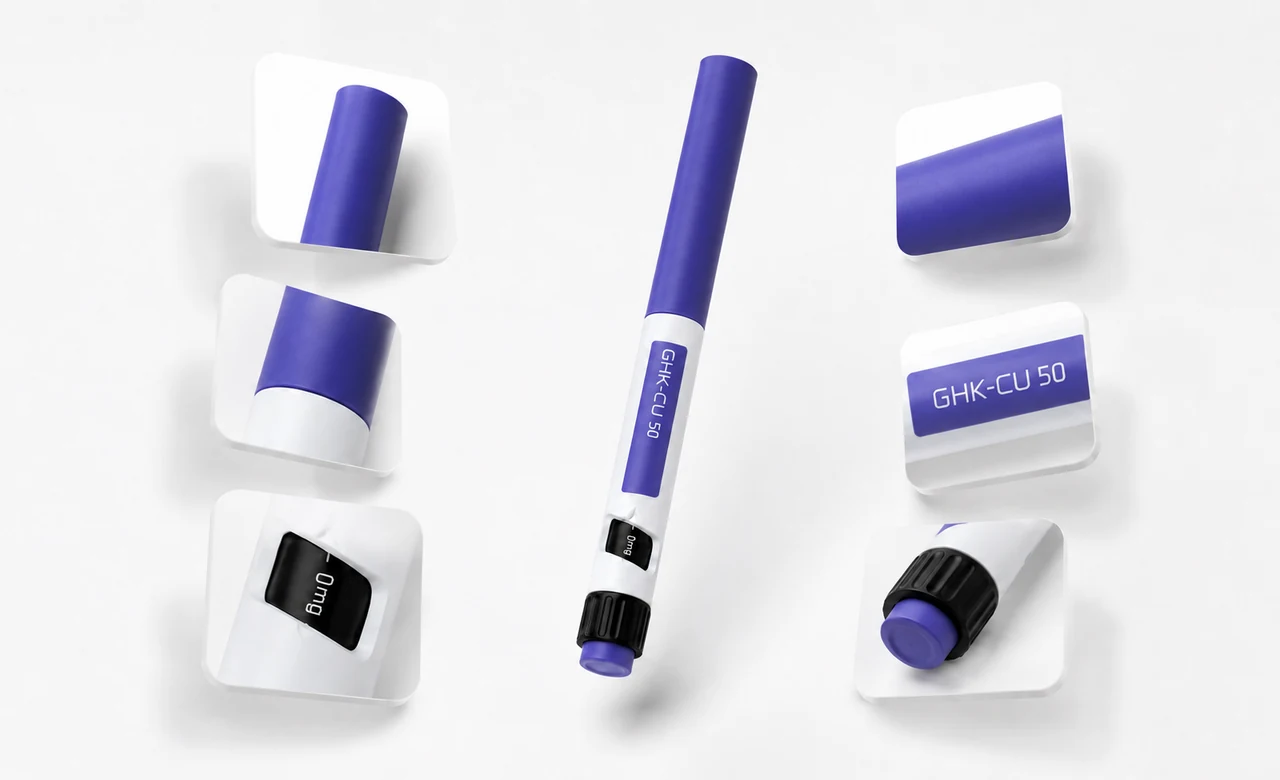
A copper-peptide pen and a salicylic-acid skincare product are different formats, even when both appear in a search about skin. If you are comparing GHK-Cu in Canggu, Bali, identify the concern and the product route first. That gives the evidence a useful question to answer.
The GHK-Cu catalogue listing identifies the presentation sold here. This comparison does not describe a way to mix it into a cosmetic routine or substitute it for a cleanser.
Begin with the label, not the colour
Packaging can make products look as if they belong together. A blue serum, a white pen and a salon treatment may all mention copper peptides while differing in composition and route. Read the complete product identity rather than relying on colour or a short promotional name.
| Label detail | Topical skincare question | Pen-format question |
|---|---|---|
| Ingredient | Which active ingredients are present? | Which compound is listed? |
| Presentation | Cleanser, serum or another cosmetic? | Exact pen presentation? |
| Amount | What does the cosmetic label specify? | What total quantity is declared? |
| Evidence | Was this topical use studied? | Does evidence concern this route? |
The table helps keep the comparison fair. It does not imply that the two products should be used together or that their quantities can be converted into each other.
The acne question is more specific than “skin”
The AAD acne guideline includes topical salicylic acid among conditionally recommended options. Acne is a particular clinical context. General texture, post-procedure care and marks after spots may require different questions and evidence.
Describe the concern before choosing an ingredient. If you have several concerns, ask which should be addressed first rather than assuming one product covers all of them. Persistent, painful or scarring problems deserve appropriate assessment.
A full routine list is useful here. Include cleansers and leave-on products, not just the newest item. Someone arriving in Bali with products from several countries may have overlapping actives without recognising their translated names.
What the GHK-Cu paper can tell you
The topical GHK-Cu study after laser resurfacing concerns a specific procedure and formulation. It does not compare a catalogue pen with salicylic acid for clogged pores. That distinction should remain visible whenever the study is cited.
Ask what outcome the authors measured. A participant's satisfaction and an objective skin assessment are different types of evidence. Neither should be renamed as a different clinical outcome just because the new wording sounds more relevant to a product.
For a useful reading note, write the preparation, population and endpoint in one line. If the product route differs from the one you are considering, mark that difference explicitly instead of treating it as a minor packaging issue.
Planning a skincare discussion in Canggu
Bring complete labels or photographs of the products you already use. Explain recent procedures and the particular change you want assessed. Ask how the plan will be reviewed, especially if your stay in Bali is short.
Do not assume that a treatment mentioned on an international website is available locally in the same form. Confirm the exact preparation and service with the provider. A local search term indicates relevance to your enquiry, not proof of clinical availability.
For photographs used to describe a concern, keep lighting and framing comparable where possible. The purpose is to help explain the issue, not to create a before-and-after claim. Camera changes can make a routine appear more effective than the evidence supports.
Make the product enquiry precise
The catalogue can clarify ingredients and formats. Ask about the specific listing and relevant documentation. A total amount on a pen is not a topical percentage, and instructions for a serum do not transfer to a pen preparation.
If the question is whether an ingredient is suitable for a skin condition, take it to the clinician reviewing the condition. A shop can answer product questions; it cannot reliably diagnose an image or design a personal combination of treatments from it.
FAQ
Is GHK-Cu a salicylic-acid alternative for every skin goal?
No. The goals, evidence and formulations differ. A comparison needs a specific question.
Can I copy a serum routine for a pen?
No. A different route requires its own instructions and clinical context. This article provides no mixing or application protocol.
What should I bring to a consultation?
The complete routine, product labels, relevant procedure history and a clear description of the concern are useful starting points.
Sources and further reading
Prepared with AI assistance and checked against the linked sources. No licensed medical review is claimed.